Introduction
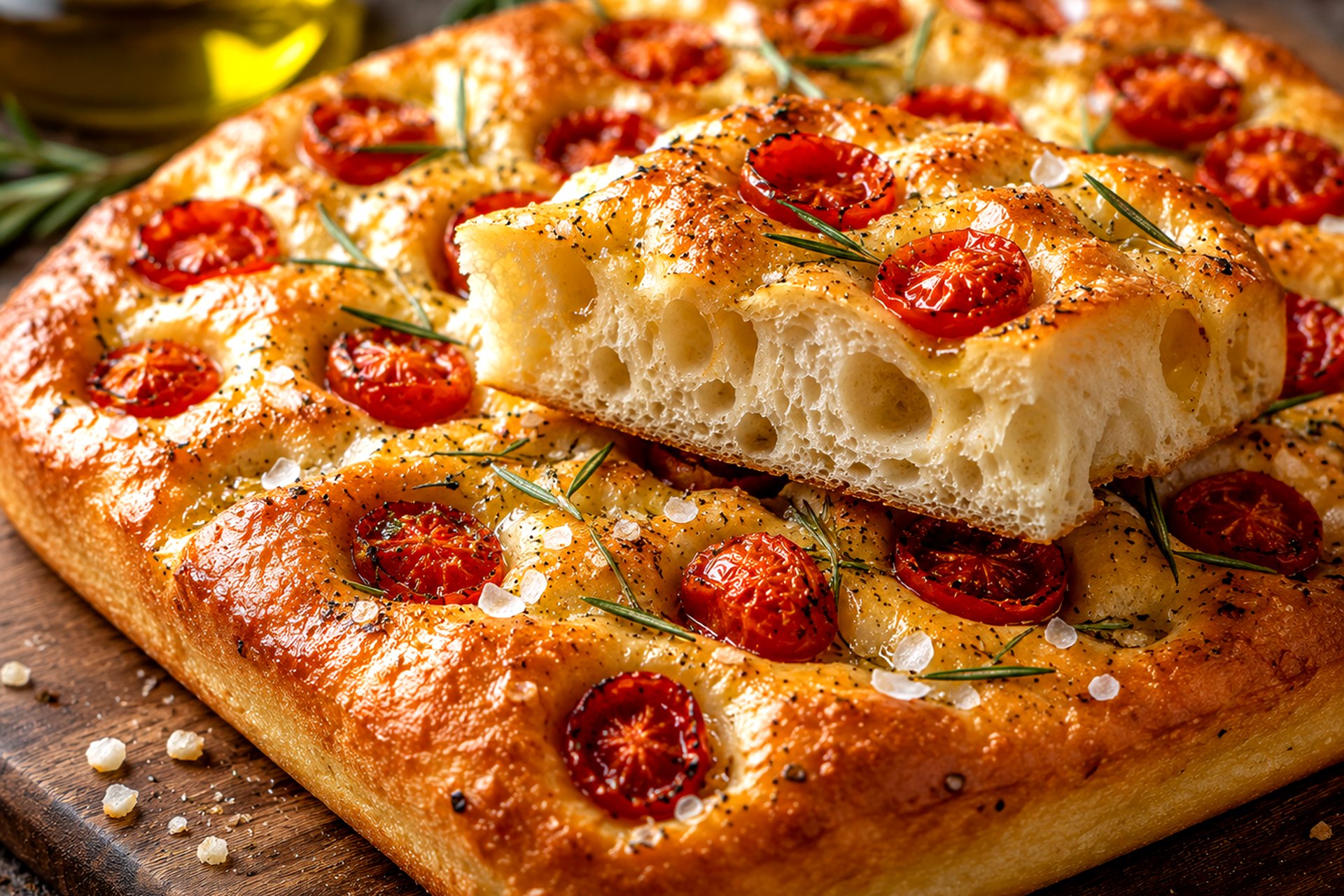
Golden, airy, and infused with fragrant olive oil, this Authentic Italian Focaccia Bread with Cherry Tomatoes and Rosemary is everything I believe homemade bread should be. With its crisp, lightly crunchy crust, pillowy interior, and signature finger-made dimples, every bite is packed with the fresh flavors of sweet cherry tomatoes, aromatic rosemary, flaky sea salt, and extra-virgin olive oil. These classic toppings are hallmarks of traditional Italian focaccia, and they highlight its simple yet irresistible character.
Whether I’m serving it as an appetizer, alongside soups and pasta, building gourmet sandwiches, or simply enjoying it warm with olive oil for dipping, this rustic Italian bread is incredibly versatile. The slow-risen dough develops a wonderfully light texture, while the generous olive oil creates the beautifully crisp edges that make focaccia so unforgettable.
Simple ingredients, timeless techniques, and incredible flavor come together in this classic recipe that’s perfect for family dinners, holiday tables, or weekend baking. Once you experience the aroma of freshly baked focaccia filling your kitchen, you’ll want to make it again and again — I know I do, and it never lasts long in my house.
Why You’ll Love This Recipe
- Crispy golden crust with a soft, airy interior.
- Bursting with juicy roasted cherry tomatoes and fragrant rosemary.
- Made with simple pantry ingredients.
- Authentic Italian bakery-style flavor.
- Perfect for beginners and experienced bakers alike.
- Delicious as an appetizer, side dish, or sandwich bread.
- Naturally vegan and dairy-free.
- Great for entertaining, holidays, or everyday meals.
- Wonderful served warm with olive oil and balsamic vinegar.
- Stays soft and flavorful for days when stored properly.
Ingredient Notes
Every ingredient plays an important role in creating a light, airy focaccia with a crispy crust and rich Italian flavor.
- Bread flour: High-protein bread flour produces the chewy texture and airy crumb that authentic focaccia is known for. All-purpose flour can also be used, but the texture will be slightly softer.
- Warm water: Activates the yeast and hydrates the dough. The water should be warm, about 100–110°F (38–43°C), not hot.
- Active dry yeast: Helps the dough rise slowly, creating a light, fluffy interior with beautiful air pockets. Instant yeast may also be used.
- Extra-virgin olive oil: One of the most important ingredients. It enriches the dough, creates the signature crispy golden crust, and adds authentic Mediterranean flavor. Use a high-quality olive oil for the best results.
- Cherry tomatoes: Their natural sweetness intensifies as they roast, adding juicy bursts of flavor and beautiful color to every slice.
- Fresh rosemary: Adds a fragrant, earthy aroma that perfectly complements the olive oil and tomatoes. Fresh rosemary is highly recommended.
- Flaky sea salt: Sprinkled over the top before baking, it adds crunch and enhances every bite.
- Granulated sugar or honey: A small amount helps activate the yeast and encourages a beautifully golden crust.
- Fine salt: Essential for seasoning the dough and strengthening the gluten structure.
- Garlic (optional): Thinly sliced or roasted garlic adds even more flavor without overpowering the bread.
- Fresh basil (optional): Scatter chopped basil over the baked focaccia for a bright, fresh finish.

Authentic Italian Focaccia Bread with Cherry Tomatoes and Rosemary
Ingredients
Method
- Prepare the Dough — In a large bowl, combine flour, yeast, and salt. Add warm water and olive oil. Mix until a sticky dough forms. Cover and let rise for 1½ to 2 hours or until doubled in size.
- Shape the Focaccia — Grease a 9×13-inch baking pan generously with olive oil. Transfer the dough to the pan and gently stretch it toward the edges. Cover and let rise again for 30 minutes.
- Add the Toppings — Preheat oven to 425°F (220°C). Using your fingertips, press deep dimples all over the dough. Drizzle with olive oil. Top with cherry tomatoes, rosemary, sea salt, and black pepper.
- Bake — Bake for 22–25 minutes until golden brown.
- Finish — Brush with a little extra olive oil while warm. Allow to cool slightly before slicing.
Tips from Chef Lea
Use a really good olive oil, and be generous with it. Extra-virgin olive oil is one of the most important ingredients in this bread, so I always reach for a high-quality bottle. I use it in the dough, I coat the pan generously so nothing sticks, and I drizzle more over the top — that’s what gives focaccia its signature crisp, golden crust and rich Mediterranean flavor.
Give the dough plenty of time to rise. A slow rise is what creates the light, airy texture and those big, beautiful air pockets focaccia is famous for, so I never rush it. And please don’t skip the second 30-minute rise after the dough goes into the pan — it makes the interior incredibly soft.
Keep the dough wet and sticky. This dough is meant to be highly hydrated, and that stickiness is exactly what bakes up into an open, airy crumb. I always resist the urge to add extra flour; too much flour is one of the main reasons focaccia turns out dense.
Oil your fingertips before dimpling. I lightly oil (or wet) my fingertips and press deep dimples all over the dough, right down toward the pan. The dimples keep the bread from puffing up unevenly, and they catch little pools of olive oil and toppings in every bite.
Press the tomatoes in gently, and salt at the last moment. I nestle each cherry tomato half into the dough so it stays in place while baking and roasts into a juicy burst of sweetness. The flaky sea salt goes on just before the pan goes into the oven, so it keeps its delicate crunch.
Bake it deeply golden at 425°F (220°C). I bake for 22–25 minutes, until the top is a deep golden brown and the bottom is crisp — that contrast of crunchy edges and pillowy middle is exactly what I’m after. If the bottom still feels soft, I give it a couple more minutes.
Brush with olive oil and let it rest. As soon as the focaccia comes out of the oven, I brush it with a little extra olive oil for richness and shine. Then I let it cool for about 10 minutes before slicing, so the crumb has time to finish setting.
Variations
- Roasted garlic — Add roasted garlic cloves for a sweet, savory flavor.
- Mediterranean olive and oregano — Top with sliced olives and fresh oregano for a Mediterranean-inspired version.
- Parmesan crust — Sprinkle freshly grated Parmesan over the dough before baking for a cheesy crust.
- Red onion — Add thinly sliced red onions for a touch of sweetness.
- Sun-dried tomato and basil — Top with sun-dried tomatoes and basil for extra Italian flavor.
- Burrata and basil — Finish with burrata and fresh basil after baking for an elegant appetizer.
- Caramelized onion and thyme — Add caramelized onions and thyme for a rich, rustic variation.
- Red pepper flakes — Sprinkle crushed red pepper flakes before baking for a subtle kick of heat.
Make Ahead & Storage
Make ahead: Homemade focaccia tastes best on the day it’s baked, but you can absolutely get ahead. After the first rise, refrigerate the dough overnight — this slow fermentation develops even more flavor and creates a lighter, airier texture. Let it come back to room temperature, then shape, top, and bake as directed.
Room temperature: Store the cooled focaccia in an airtight container or wrap it tightly in aluminum foil, and keep it at room temperature for up to 2 days.
Refrigerator: For longer storage, refrigerate the focaccia in an airtight container for up to 5 days. Let it come to room temperature or warm it before serving for the best texture.
Freezer: Wrap individual slices or the whole loaf tightly in plastic wrap and then in aluminum foil, and freeze for up to 3 months. Thaw overnight at room temperature before reheating.
Reheating: Warm the focaccia in a 350°F (175°C) oven for 8–10 minutes, until heated through and lightly crisp on the outside. Drizzle with a little extra-virgin olive oil before serving for a freshly baked taste.
Frequently Asked Questions
Can I make the dough ahead of time?
Yes! After the first rise, refrigerate the dough overnight. This slow fermentation develops even more flavor and creates a lighter, airier texture.
Why didn’t my focaccia develop large air bubbles?
The dough may not have risen long enough, or it may have been handled too much after rising. Be gentle to preserve the air pockets.
Can I use all-purpose flour instead of bread flour?
Absolutely. Bread flour creates a chewier texture, but all-purpose flour still makes a delicious, soft focaccia.
Why is my focaccia dense?
Dense focaccia is usually caused by underproofing, using too much flour, or overworking the dough. A well-hydrated dough and enough rising time are essential.
Can I add other toppings?
Definitely! Olives, roasted garlic, caramelized onions, grated Parmesan, fresh basil, sun-dried tomatoes, and sliced peppers are all excellent additions.
Can I use dried rosemary?
Yes, although fresh rosemary provides a more fragrant and authentic flavor. If using dried rosemary, use about one-third of the amount called for in the recipe.
What can I serve with focaccia?
It’s delicious with olive oil and balsamic vinegar, soups, pasta, salads, charcuterie boards, grilled meats, or used as sandwich bread.
More Appetizers Recipes You’ll Love
- Savory Parmesan Tiramisu Cups with Garlic Mushrooms and Crispy Parmesan
- Honey Glazed Carrot and Walnut Tartlets with Whipped Feta
- Ultimate Creamy Jalapeño Cheese Dip
Conclusion
This Authentic Italian Focaccia Bread with Cherry Tomatoes and Rosemary is the perfect example of how simple ingredients can create extraordinary flavor. With its crispy golden crust, soft and airy interior, juicy roasted cherry tomatoes, fragrant rosemary, and generous drizzle of extra-virgin olive oil, every bite brings a taste of traditional Italian baking. Whether you serve it as an appetizer, alongside your favorite pasta, with soups and salads, or fresh from the oven with a little olive oil, this homemade focaccia is sure to become a staple in your kitchen — once you bake your first loaf, you’ll understand why this timeless Italian bread is loved around the world.
Follow along for a new recipe every day: find me on Facebook at Lea Recipes Kitchen, on Pinterest at @learecipes, and on Instagram @lea_recipes1. If you make this focaccia, I’d love it if you’d leave the recipe a star rating and a comment — it truly helps other home cooks find it. Thank you!

Leave a Reply