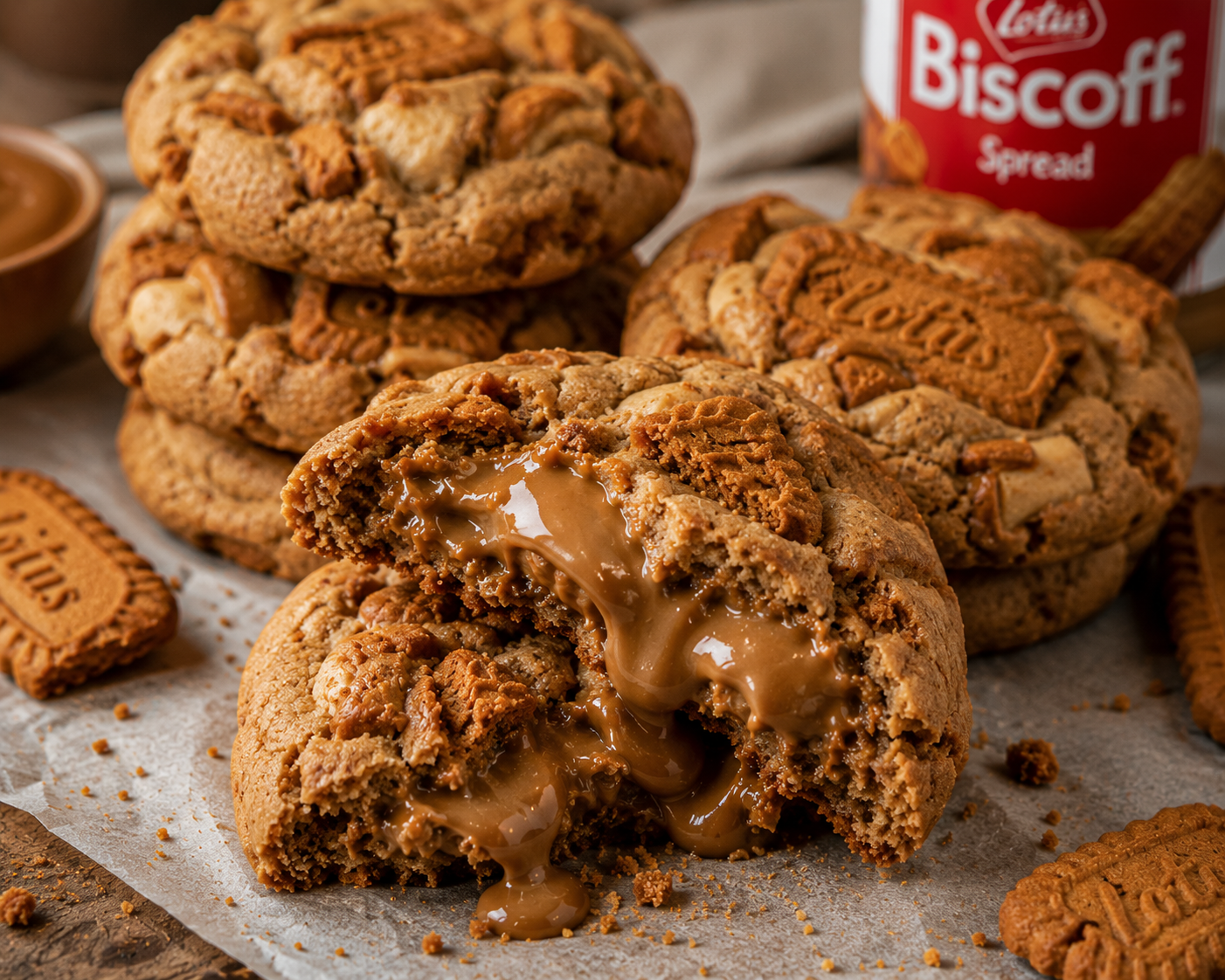
The first time I baked a batch of these Gooey Biscoff Cookie Butter Cookies, I pulled the tray out of the oven, broke one cookie in half while it was still warm, and watched the center slowly ooze out like caramel lava. That was it for me — I have made them more times than I can count since, and they disappear faster than any other cookie in my kitchen.
The idea is simple but genius: a soft, brown-sugar cookie dough made with cookie butter and studded with crunchy Biscoff pieces, wrapped around a hidden spoonful of pure Biscoff spread. Freezing that little scoop of spread first is the whole secret — it stays put while you shape the cookies, then melts into a warm, gooey middle as they bake at 350°F (175°C). Thick edges, soft centers, and that deep caramelized spice flavor in every bite.
Gooey Biscoff Cookie Butter Cookies
Ingredients
Method
- Freeze the Biscoff Filling: Line a small plate or baking sheet with parchment paper. Spoon the 1/2 cup Biscoff spread into 10 small portions, about 2 teaspoons each. Freeze for 30–40 minutes, or until firm enough to handle.
- Prepare the Cookie Dough: In a large bowl, beat the softened butter, brown sugar, and granulated sugar for about 2 minutes, until creamy. Add the 1/3 cup Biscoff spread and mix until smooth. Add the egg and vanilla extract. Mix just until fully combined.
- Add the Dry Ingredients: In a separate bowl, whisk together the flour, baking soda, baking powder, and salt. Gradually add the dry ingredients to the wet mixture. Mix just until a soft cookie dough forms. Fold in the roughly chopped Biscoff cookies. Do not overmix.
- Fill the Cookies: Divide the cookie dough into 10 equal portions. Flatten one portion of dough into a thick disc. Place one frozen Biscoff portion in the center. Carefully bring the dough around the filling and pinch the edges closed. Roll gently into a thick ball, making sure the Biscoff filling is completely enclosed. Repeat with the remaining dough and filling.
- Add the Topping: Press a few broken Biscoff cookie pieces into the top of each cookie. Arrange the cookies on a parchment-lined baking sheet, leaving plenty of space between them.
- Chill: Refrigerate the assembled cookies for 15 minutes. Meanwhile, preheat the oven to 350°F (175°C).
- Bake: Bake for 11–13 minutes, or until the edges are set and lightly golden while the centers still look slightly soft. The cookies will continue to set as they cool, so avoid overbaking. Allow them to rest on the baking sheet for 10–15 minutes before transferring them to a cooling rack.
- Finish: For an extra Biscoff finish, gently warm 2 tablespoons of cookie butter until pourable and drizzle a small amount over the cooled or slightly warm cookies. For a cleaner stuffed-cookie appearance, leave the tops undrizzled and allow the creamy Biscoff center to be revealed when the cookies are broken open.
Why You’ll Love These Biscoff Cookies
- A truly gooey center. A frozen scoop of Biscoff spread hides inside every cookie and melts into a warm, creamy middle as they bake — no dry, cakey middles here.
- Thick and chewy, never flat. A short chill before baking keeps these bakery-style cookies tall, with crisp golden edges and soft centers.
- Cookie butter in every layer. Spread in the dough, spread in the center, and crunchy Biscoff pieces folded through and pressed on top.
- Simple pantry ingredients. Butter, sugars, an egg, and flour plus the Biscoff — nothing fancy, nothing hard to find.
- Freezer-friendly. The filled dough balls freeze beautifully, so warm cookies are never more than about 15 minutes away.
- A guaranteed crowd-pleaser. They look impressive, taste like a coffee-shop treat, and travel well for bake sales and cookie boxes.
Tips from Chef Lea
- Freeze the centers until they are properly hard. I give the scoops of spread a full 30–40 minutes in the freezer. If they feel soft or sticky when you pick them up, they will leak in the oven — pop them back in for another 10 minutes.
- Seal like you mean it. I pinch the dough closed over the frozen center, then roll the ball between my palms and check for cracks. Any thin spot or open seam is exactly where the filling will escape.
- Do not skip the chill. Fifteen minutes in the fridge firms the butter back up, and that is what keeps the cookies thick in a 350°F (175°C) oven instead of spreading into pancakes.
- Pull them out while the centers still look soft. The edges should be set and lightly golden, but the middle will look slightly underdone — that is perfect. They finish setting on the hot tray.
- Respect the rest. I know it is hard, but those 10–15 minutes on the tray are when the gooey center settles into the cookie instead of running out of it.
- Keep the cookie chunks chunky. I chop the Biscoff cookies into a mix of crumbs and bigger pieces — the big pieces stay crunchy and give you those caramelized pockets.
- Warm leftovers before serving. Ten seconds in the microwave brings the center right back to gooey.
Variations to Try
- White Chocolate Biscoff Cookies: Fold 1/2 cup of white chocolate chips into the dough — the creamy sweetness loves the spiced caramel notes of Biscoff.
- Biscoff Crumble Cookies: Press fine Biscoff crumbs over the tops instead of chunks for an even, crunchy coating.
- Smaller Cookies: Use about 1 teaspoon of frozen filling per cookie and a smaller scoop of dough, then bake a few minutes less — perfect for cookie platters.
- Espresso Biscoff Cookies: Add 1/2 teaspoon of instant espresso powder to the dry ingredients; it deepens the caramel flavor without making the cookies taste like coffee.
Make Ahead & Storage
Make ahead: The filled, unbaked cookie balls keep in the refrigerator for up to 24 hours, so you can assemble today and bake fresh tomorrow. Bake them straight from the fridge.
Room temperature: Store baked cookies in an airtight container for up to 3 days.
Refrigerator: They keep for up to 5 days; let them come back to room temperature, or warm them briefly, before serving so the center turns gooey again.
Freezer: Freeze the filled, unbaked dough balls for up to 2 months. Bake from frozen at 350°F (175°C), adding a minute or two to the baking time.
Frequently Asked Questions
Why did my filling leak out?
Almost always because the Biscoff centers were not frozen firm enough, or the dough was not completely sealed around them. Check every ball for cracks before chilling, and re-pinch any seams you find.
Why did my cookies spread too much?
Warm dough is the usual culprit — butter that was too soft to start with, or skipping the 15-minute chill. Chill the assembled cookies until they feel firm, and make sure the oven is fully preheated to 350°F (175°C) before the tray goes in.
Can I use crunchy cookie butter instead of smooth?
Yes — crunchy Biscoff spread works in both the dough and the centers, and adds a little extra texture to the gooey middle.
Can I make these ahead of time?
Absolutely. Assemble the filled dough balls, cover, and refrigerate for up to 24 hours before baking. You can also freeze them unbaked for up to 2 months.
How do I keep the centers gooey?
Two things: freeze the filling solid so it melts slowly, and do not overbake. Pull the cookies when the centers still look soft, and let them rest on the tray for 10–15 minutes.
More Desserts Recipes You’ll Love
- Soft Pumpkin Cookies with Cream Cheese Frosting
- Creamy Banana Pudding Cheesecake Mini Pies
- Soft & Fluffy Cinnamon Rolls with Cream Cheese Frosting
Conclusion
Crisp golden edges, a thick and chewy middle, crunchy caramelized Biscoff pieces, and that warm, creamy center — these Gooey Biscoff Cookie Butter Cookies are everything I want in a cookie. Serve them slightly warm, with the filling still soft, and watch how fast the plate empties. Happy baking!
Enjoyed these cookies? Follow Lea Recipes on Facebook and Pinterest, and on Instagram @lea_recipes1 / @learecipes for a fresh recipe every day. If you baked a batch, I would love to hear how they turned out — leave a comment below and give the recipe a star rating!

Leave a Reply