Introduction
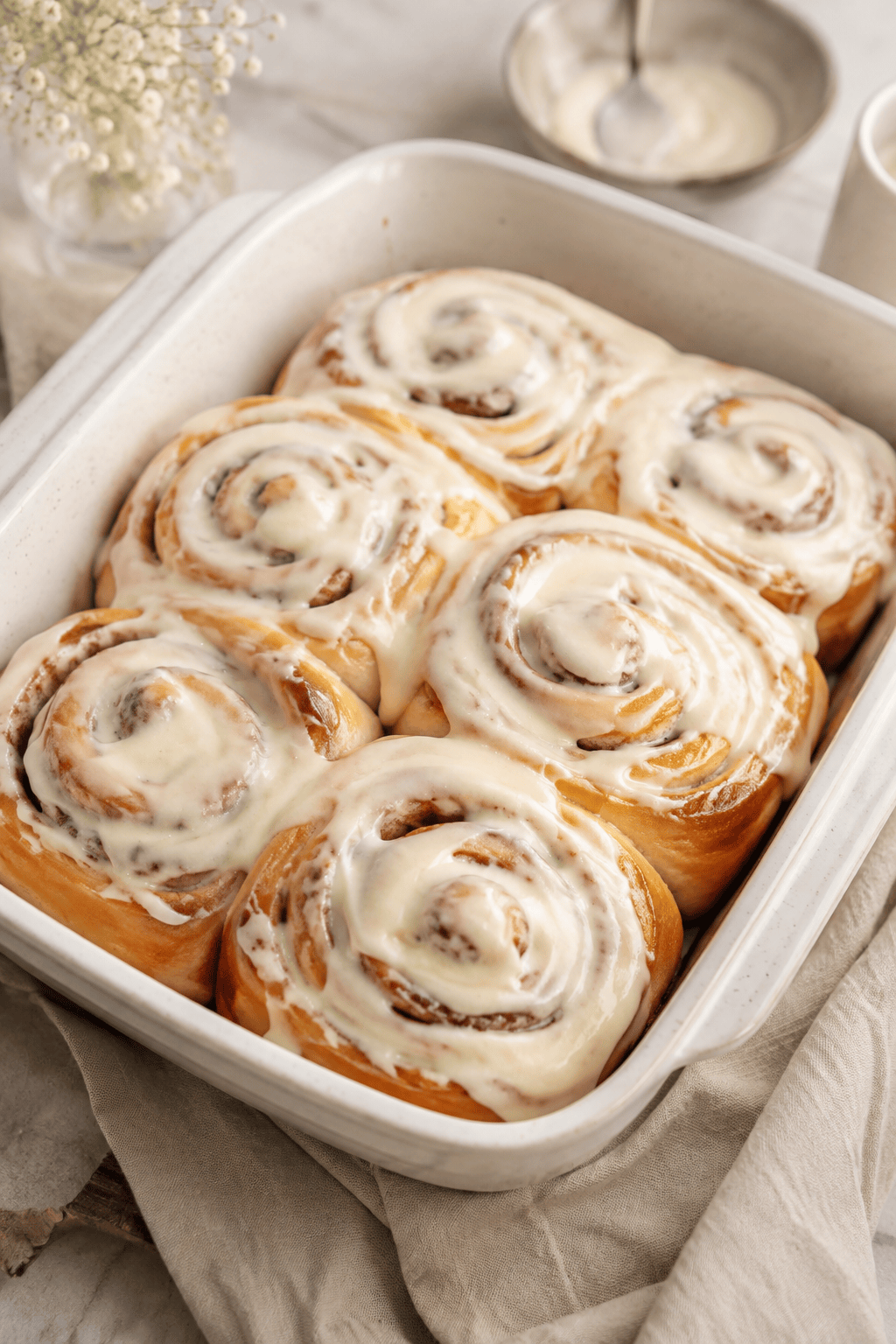
These homemade cinnamon rolls are soft, fluffy, and filled with a rich buttery cinnamon-sugar swirl. Baked until lightly golden and finished with a creamy cream cheese frosting, they have tender centers, caramelized edges, and plenty of cinnamon in every layer.
Perfect for breakfast, brunch, holidays, or a cozy weekend treat, this recipe uses simple ingredients and straightforward steps for bakery-style cinnamon rolls at home.
Why You’ll Love This Recipe
- Soft, fluffy, tender dough
- Rich cinnamon-brown sugar filling
- Thick and creamy cream cheese frosting
- Simple ingredients
- Easy-to-follow method
- Can be prepared ahead of time
- Perfect for breakfast, brunch, or special occasions
Recipe Information
Prep Time: 30 minutes
Rise Time: 1 hour 30 minutes
Bake Time: 22–27 minutes
Total Time: About 2 hours 30 minutes
Servings: 9 large cinnamon rolls
Ingredients
For the Dough
- 3/4 cup (180 ml) whole milk, warm
- 2 1/4 teaspoons (7 g) active dry yeast
- 1/4 cup (50 g) granulated sugar, divided
- 1 large egg, room temperature
- 1 large egg yolk, room temperature
- 1/4 cup (57 g) unsalted butter, melted and slightly cooled
- 3 cups (375 g) all-purpose flour, plus more if needed
- 3/4 teaspoon salt
For the Cinnamon Filling
- 1/2 cup (113 g) unsalted butter, very soft
- 3/4 cup (150 g) packed light brown sugar
- 1 1/2 tablespoons ground cinnamon
- 1 teaspoon vanilla extract
- Pinch of salt
For the Cream Cheese Frosting
- 4 oz (113 g) cream cheese, softened
- 3 tablespoons (42 g) unsalted butter, softened
- 1 cup (120 g) powdered sugar
- 1 teaspoon vanilla extract
- 1–2 tablespoons whole milk or heavy cream
- Small pinch of salt
Instructions
1. Activate the Yeast
Pour the warm milk into a large mixing bowl. The milk should be warm but not hot, around 105–110°F (40–43°C).
Add the yeast and 1 tablespoon of the granulated sugar. Stir gently and let stand for 5–10 minutes, until the mixture becomes slightly foamy.
2. Make the Dough
Add the remaining granulated sugar, egg, egg yolk, and melted butter. Whisk until combined.
Add the flour and salt. Mix with a wooden spoon or dough hook until a shaggy dough forms.
Knead for 8–10 minutes by hand, or about 6–7 minutes with a stand mixer on low-medium speed.
The finished dough should be smooth, soft, and slightly tacky. Avoid adding too much extra flour, as this can make the cinnamon rolls dense.
3. First Rise
Transfer the dough to a lightly greased bowl and cover with a clean kitchen towel or plastic wrap.
Let rise in a warm place for 60–75 minutes, or until approximately doubled in size.
4. Prepare the Filling
In a small bowl, combine the brown sugar, cinnamon, and salt.
Keep the softened butter and vanilla separate until ready to assemble.
5. Roll Out the Dough
Lightly flour a clean work surface.
Gently punch down the risen dough and roll it into approximately a 14 x 18-inch rectangle.
Spread the softened butter evenly over the dough, leaving a small border around the edges.
Drizzle the vanilla over the butter, then sprinkle the cinnamon-brown sugar mixture evenly over the entire surface.
Gently press the filling into the butter.
6. Shape the Cinnamon Rolls
Starting from one of the long sides, roll the dough tightly into a log.
Pinch the seam gently to seal.
Using unflavored dental floss or a sharp serrated knife, cut the log into 9 equal rolls.
7. Second Rise
Lightly grease a 9 x 9-inch baking dish.
Arrange the cinnamon rolls in the dish, leaving a little space between them.
Cover and let rise for another 30–40 minutes, until noticeably puffy and almost touching.
Meanwhile, preheat the oven to 350°F (175°C).
8. Bake
Bake the cinnamon rolls for 22–27 minutes, until lightly golden on top and cooked through in the centers.
Avoid overbaking. The rolls should remain soft and tender rather than becoming deeply browned.
Let cool in the baking dish for about 10 minutes before frosting.
Cream Cheese Frosting
In a medium bowl, beat the softened cream cheese and butter until completely smooth.
Add the powdered sugar, vanilla, and salt. Beat again until creamy.
Add milk or heavy cream, 1 tablespoon at a time, until the frosting reaches a thick but spreadable consistency.
Spread generously over the cinnamon rolls while they are still slightly warm. The warmth will soften the frosting just enough to settle naturally into the spirals.
Tips for Perfect Cinnamon Rolls
Use warm, not hot, milk. Milk that is too hot can damage the yeast.
Keep the dough soft. A slightly tacky dough produces softer cinnamon rolls than a dry, heavily floured dough.
Use room-temperature ingredients. This helps the dough rise evenly.
Do not rush the rise. Instead of relying only on the clock, look for the dough to approximately double during the first rise and become visibly puffy during the second.
Do not overbake. Remove the rolls once they are lightly golden and the centers are baked through.
Frost while slightly warm. This creates a soft, creamy layer without completely melting the frosting.
Variations
Pecan Cinnamon Rolls
Sprinkle about 1/2 cup chopped toasted pecans over the cinnamon filling before rolling.
Maple Cinnamon Rolls
Replace the vanilla in the frosting with 1–2 teaspoons pure maple syrup and reduce the milk slightly as needed.
Orange Cinnamon Rolls
Add finely grated orange zest to the filling and a small amount of fresh orange juice to the frosting.
Extra Cinnamon
Increase the cinnamon to 2 tablespoons for a stronger cinnamon flavor.
Make-Ahead Cinnamon Rolls
Prepare and shape the rolls, then arrange them in the baking dish.
Cover tightly and refrigerate overnight before the second rise.
The next morning, remove the dish from the refrigerator and allow the rolls to sit at room temperature for approximately 45–75 minutes, until puffy.
Bake as directed.
Storage
Store leftover cinnamon rolls in an airtight container in the refrigerator for up to 4 days because of the cream cheese frosting.
For the best texture, allow a roll to come closer to room temperature or warm it briefly before serving.
Unfrosted cinnamon rolls can also be frozen for up to 2 months. Thaw before warming and adding fresh frosting.
Frequently Asked Questions
Why are cinnamon rolls sometimes dense?
Dense rolls are often caused by adding too much flour, insufficient kneading, or not allowing enough time for the dough to rise.
How can cinnamon rolls stay soft?
Keep the dough slightly tacky, avoid adding unnecessary flour, and do not overbake the rolls.
Can instant yeast be used?
Yes. The same amount of instant yeast can be used. It can be mixed directly with the dry ingredients, although using the warm-milk method also works.
How can the rolls be cut without squashing them?
Slide a piece of unflavored dental floss underneath the dough log, cross the ends over the top, and pull in opposite directions. This produces clean slices without compressing the spirals.
Can the dough be prepared the night before?
Yes. Shape the rolls, refrigerate them overnight, then allow them to become puffy at room temperature before baking.
Conclusion
Soft centers, buttery cinnamon layers, lightly golden edges, and creamy cream cheese frosting make these homemade cinnamon rolls a comforting bakery-style treat. The dough stays tender while the brown sugar and cinnamon create a rich swirl throughout every roll.
Serve them slightly warm for the best soft, fluffy texture.
 Lea recipes
Leave a comment