Introduction
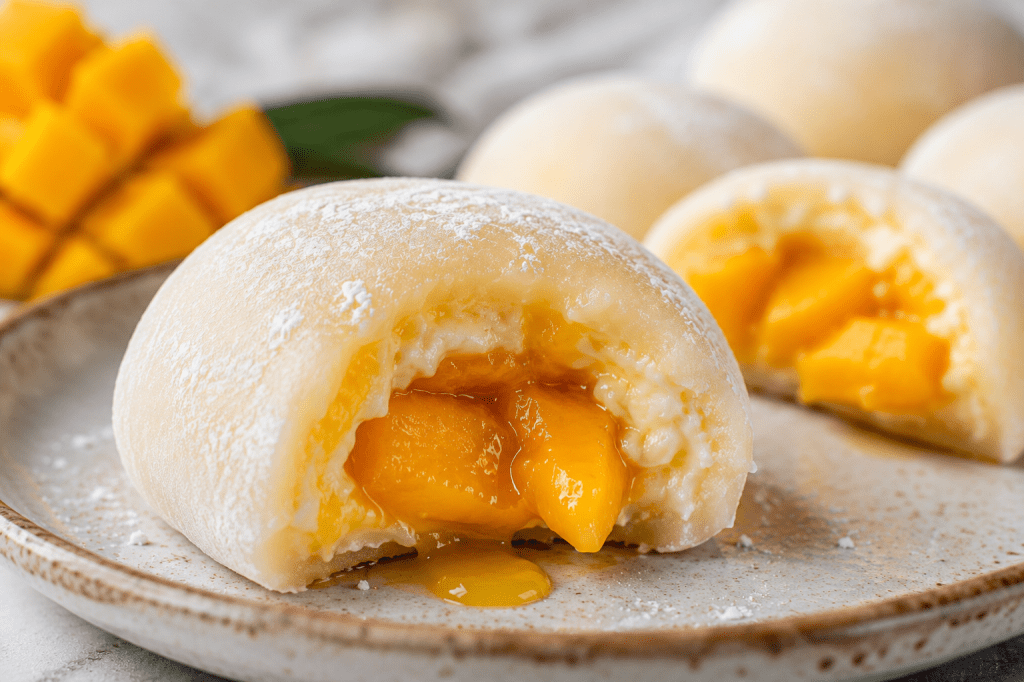
Soft, chewy, creamy, and bursting with tropical flavor, these Homemade Mango Mochi are an irresistible little dessert filled with fluffy vanilla cream and sweet, juicy fresh mango.
Each mochi features a delicate, pillowy rice dough wrapped around a cool and creamy center. Bite through the soft, stretchy exterior and you’ll discover whipped cream and fresh mango tucked inside, creating a beautiful contrast between chewy, creamy, and juicy textures.
Despite their elegant appearance, homemade mochi are surprisingly approachable. The dough comes together with just a few simple ingredients and cooks quickly in the microwave, so there’s no complicated equipment or baking required.
These refreshing mango mochis are especially delicious during the warmer months, but they’re beautiful enough for parties, afternoon treats, special occasions, or whenever you’re craving a light tropical dessert.
Your current recipe makes 6 mochis in about 55 minutes, including chilling time.
Why You’ll Love This Mango Mochi
- Soft and chewy – The glutinous rice flour creates that signature stretchy mochi texture.
- Creamy center – Lightly sweetened vanilla whipped cream makes every bite soft and luxurious.
- Fresh mango inside – Juicy mango adds natural sweetness and a bright tropical flavor.
- No oven required – The mochi dough cooks directly in the microwave.
- Simple ingredients – You only need a short list of easy-to-find ingredients.
- Beautiful presentation – The smooth little mochi rounds look elegant and delicate.
- Perfect for summer – Served chilled, they’re wonderfully refreshing.
- Easy to customize – Try strawberries, peaches, raspberries, or other soft fruits.
Ingredient Notes
Glutinous Rice Flour
You’ll need 1 cup (120 g) glutinous rice flour for the dough.
This ingredient is essential. Despite its name, glutinous rice flour does not refer to gluten—it gets its name from the sticky texture of the cooked rice.
Do not substitute regular rice flour. Regular rice flour will not create the characteristic soft, stretchy texture required for mochi.
Mango
Use 1 ripe mango, diced into small pieces.
Choose a mango that is sweet and ripe but still firm enough to cut cleanly. Very soft or watery mango can make the filling more difficult to seal inside the mochi.
Keep some pieces separate from the whipped cream so you can place a juicy mango cube directly in the center of each mochi.
Heavy Cream
Your original recipe uses ½ cup (120 ml) heavy cream.
For the easiest whipping, keep the cream cold until you’re ready to use it.
Powdered Sugar
Two tablespoons lightly sweeten the whipped cream without making the filling overly sugary.
Since ripe mango already provides natural sweetness, you don’t need a very sweet cream.
Vanilla Extract
A small amount of vanilla adds warmth and depth to the whipped cream while allowing the mango flavor to remain dominant.
Milk
The mochi dough uses 1 cup (240 ml) milk, giving it a soft and tender texture.
Sugar
A quarter cup of sugar lightly sweetens the mochi dough itself.
Vegetable Oil
A tablespoon of neutral vegetable oil helps keep the dough soft and easier to work with.
Cornstarch
Cornstarch is used for dusting your hands and work surface because freshly cooked mochi dough is extremely sticky.
Use enough to make the dough manageable, but avoid coating it excessively because too much cornstarch can leave the exterior dry or powdery.
Recipe Overview
Prep Time: 20 minutes
Cook Time: 5 minutes
Chill Time: 30 minutes
Total Time: 55 minutes
Servings: 6 Mochi
Course: Dessert
Cuisine: Japanese-Inspired
Method: Microwave
Difficulty: Moderate
These times and the yield correspond to your currently published recipe.
Ingredients
For the Mochi Dough
- 1 cup (120 g) glutinous rice flour
- ¼ cup (50 g) granulated sugar
- 1 cup (240 ml) milk
- 1 tablespoon vegetable oil
- Cornstarch, for dusting
For the Creamy Mango Filling
- 1 ripe mango, peeled and diced into small cubes
- ½ cup (120 ml) cold heavy cream
- 2 tablespoons powdered sugar
- ½ teaspoon vanilla extract
Detailed Instructions
1. Prepare the Mango
Peel the ripe mango and cut the flesh into small cubes.
Choose the prettiest, firmest pieces for the centers of the mochi. The mango should be ripe and sweet but not overly soft or watery, since excess moisture can make the mochi difficult to seal.
Place the mango pieces in the refrigerator while you prepare the cream and dough.
2. Make the Creamy Filling
Pour the cold heavy cream into a chilled mixing bowl.
Add the powdered sugar and vanilla extract, then beat with an electric mixer until medium-stiff peaks form.
The cream should be firm enough to hold its shape but still smooth and fluffy. Avoid overwhipping.
3. Prepare the Mango Cream Centers
For an especially beautiful center, place a small spoonful of whipped cream onto a parchment-lined plate or small tray.
Press one mango cube into the center and cover it with a little more whipped cream.
Repeat until you have 6 portions.
Place the filling portions in the freezer for approximately 15–20 minutes. You don’t want them frozen solid—just firm enough to make wrapping much easier.
This is one of the best tricks for getting neat, round mochi without the cream escaping.
4. Make the Mochi Batter
In a large microwave-safe bowl, whisk together:
- 1 cup glutinous rice flour
- ¼ cup granulated sugar
Gradually pour in the milk while whisking continuously.
Add the vegetable oil and continue whisking until the mixture is completely smooth and there are no visible lumps.
The batter should look thin and creamy at this stage.
5. Cook the Mochi Dough
Cover the bowl loosely with microwave-safe plastic wrap or a microwave-safe plate.
Microwave for 1 minute.
Remove carefully and stir thoroughly with a heatproof spatula.
Microwave for another 1 minute, then stir again.
Continue microwaving in 30-second intervals, stirring between each interval, until the dough becomes thick, sticky, slightly translucent, and evenly cooked.
Depending on your microwave, the total cooking time will usually be around 2½–4 minutes.
6. Cool the Dough
Generously dust a clean work surface with cornstarch.
Carefully transfer the hot mochi dough onto the prepared surface.
Dust the top lightly with additional cornstarch.
Let the dough cool until it is comfortable enough to handle. Don’t try to shape it while it is extremely hot.
7. Divide the Mochi
Once cool enough to handle, divide the dough into 6 equal portions.
Keep the portions you’re not currently working with lightly covered so they don’t dry out.
8. Shape the Mochi Wrappers
Take one portion and gently flatten it into a round disc approximately 4–5 inches wide.
Try to keep the center slightly thicker than the edges.
Avoid making the wrapper extremely thin, or it may tear when you add the filling.
Use a little cornstarch on your fingers whenever the dough becomes too sticky.
9. Add the Creamy Mango Center
Take one chilled mango cream portion from the freezer and place it in the center of the mochi wrapper.
Work quickly so the cream stays cold.
Gently bring the edges of the dough upward around the filling.
10. Seal the Mochi
Pinch the edges firmly together until the filling is completely enclosed.
Be gentle—you want to stretch the dough enough to close it without tearing it.
Turn the mochi seam-side down and gently roll or cup it between your hands to create a smooth, round shape.
Repeat with the remaining dough and filling.
11. Remove Excess Cornstarch
Use a clean pastry brush or your fingertips to gently remove excess cornstarch from the exterior.
You want just enough starch to prevent sticking, not a thick white coating.
12. Chill Before Serving
Place the finished mango mochi in the refrigerator for approximately 20–30 minutes.
This allows the filling to firm slightly and makes the mochi easier and more satisfying to bite into.
Serve chilled or slightly cool.
Pro Tips for Soft and Chewy Mango Mochi
Use glutinous rice flour, not regular rice flour. This is essential for achieving the signature stretchy, chewy mochi texture.
Choose a firm-ripe mango. Overripe mango releases too much juice and can make the filling difficult to contain.
Keep the cream cold. Warm whipped cream becomes soft quickly and makes assembly much harder.
Chill the filling before wrapping. This is probably the most useful trick in this recipe. A slightly firm filling is dramatically easier to wrap inside sticky mochi dough.
Don’t overcook the dough. It should be fully cooked and stretchy, but excessive cooking can make it tougher.
Don’t use too much cornstarch. It prevents sticking, but excessive starch can leave the outside dry and powdery.
Work gently. Mochi dough stretches beautifully, but very thin areas can tear and allow the cream to escape.
Keep the center thicker. When flattening each wrapper, make the edges slightly thinner while leaving enough dough in the middle to support the filling.
Work with one filling at a time. Leave the remaining cream centers chilled while you assemble each mochi.
Serve them fresh. Freshly made mochi has the softest and most delicate texture.
Variations
Strawberry Mochi
Replace the mango with small fresh strawberries for a classic fruit-and-cream combination.
Mango Coconut Mochi
Replace part of the milk with coconut milk and add a small amount of toasted coconut to the filling.
Passion Fruit Mango Mochi
Add a little passion fruit pulp to the whipped cream for a more intensely tropical flavor.
Mango Cheesecake Mochi
Beat a small amount of softened cream cheese into the whipped cream for a richer filling.
Matcha Mango Mochi
Add a small amount of matcha powder to the mochi dough for a beautiful green exterior and slightly earthy contrast to the sweet mango.
Peach Cream Mochi
Use small pieces of ripe but firm peach instead of mango for another refreshing summer variation.
Storage
Because these mochi contain fresh whipped cream and mango, keep them refrigerated in an airtight container.
For the best soft and chewy texture, enjoy them within 1–2 days.
Place parchment paper between the mochis if necessary to prevent them from sticking together.
Can You Freeze Mango Mochi?
You can freeze them for short-term storage, but the texture of fresh mango and whipped cream may change after thawing.
For this particular fresh-fruit version, I recommend making a small batch and enjoying the mochis fresh rather than relying on freezing.
Frequently Asked Questions
What is mango mochi made of?
Mango mochi is made with a soft and chewy dough prepared from glutinous rice flour, sugar, and liquid. This version is filled with lightly sweetened whipped cream and a juicy piece of fresh mango for a creamy, fruity center.
Is glutinous rice flour the same as regular rice flour?
No. This distinction is very important. Glutinous rice flour becomes sticky, stretchy, and chewy when cooked, which creates the characteristic mochi texture. Regular rice flour will not produce the same result.
Does glutinous rice flour contain gluten?
Despite its name, glutinous rice flour refers to the sticky nature of the rice rather than the presence of gluten. If dietary restrictions are a concern, always check the packaging of the specific ingredients you use.
Why is my mochi dough so sticky?
Mochi dough is naturally very sticky. Dust your work surface, hands, and dough lightly with cornstarch to make it manageable.
Avoid adding too much cornstarch, however, because it can make the exterior dry and powdery.
Why does my mochi tear when I fill it?
The wrapper may have been stretched too thin, particularly in the center. Keep the middle slightly thicker and stretch the edges gently around the filling.
A cold, firm filling is also much easier to wrap than soft whipped cream.
How do I get perfectly round mango mochi?
Chill the cream and mango filling before assembly, use equal portions of dough, seal each mochi carefully, then place it seam-side down and gently shape it between your hands.
Can I use frozen mango?
Fresh mango is preferable because frozen mango releases more liquid as it thaws. If frozen mango is your only option, thaw it completely and pat it very dry before using.
Can I make mango mochi ahead of time?
Yes, but these are best eaten fresh. You can prepare them several hours ahead and refrigerate them in an airtight container until serving.
Why did my whipped cream leak out?
The cream may have been too soft or warm, or the mochi wrapper may have been too thin. Whip the cream until it holds its shape well and chill the filling before wrapping.
Can I make these without a microwave?
Yes. The mochi dough can also be cooked using a steaming method, although the microwave is quicker and easier for this particular recipe.
Conclusion
These Homemade Mango Mochi with Creamy Filling and Sweet Juicy Mango Center combine three irresistible textures in every bite: soft and chewy mochi, light and fluffy cream, and fresh, juicy mango.
They may look like an elaborate dessert, but once you learn how to handle the sticky rice dough, they’re surprisingly approachable to make at home. Chilling the mango cream centers before wrapping makes the process much easier and helps you create smooth, beautifully rounded mochis.
The fresh mango gives these little treats a naturally sweet tropical flavor, while the lightly sweetened cream balances the chewy exterior without making the dessert feel overly heavy.
Serve them chilled for a refreshing summer dessert, prepare them for a special occasion, or experiment with strawberries, peaches, coconut, passion fruit, or matcha to create your own variations.
 Lea recipes
Leave a comment