Introduction
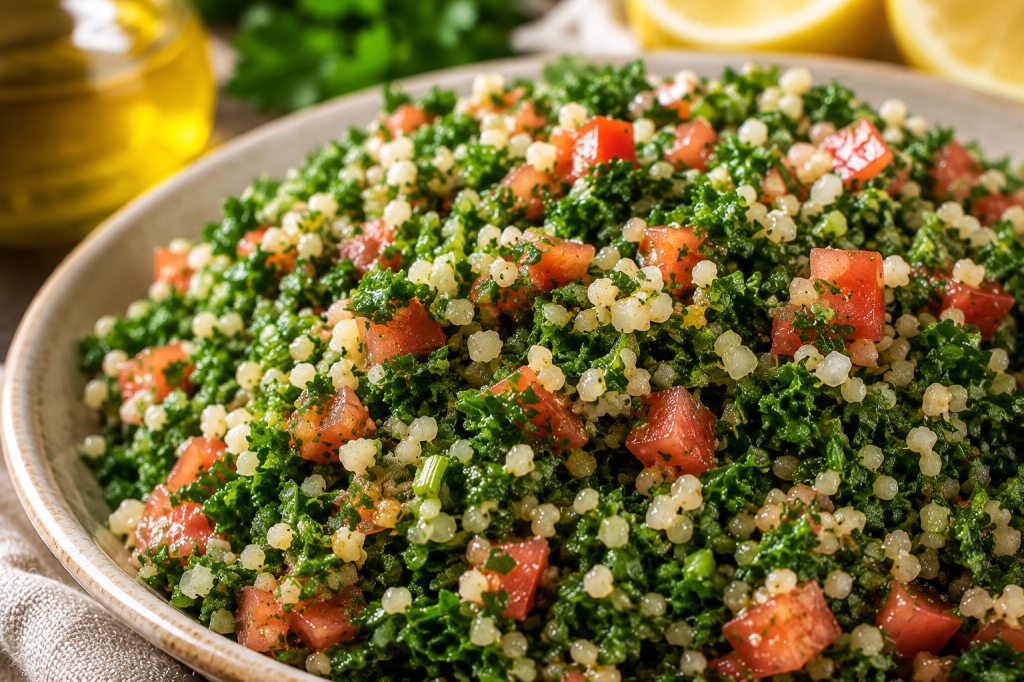
This Authentic Lebanese Tabbouleh Salad is fresh, vibrant, and packed with bright Mediterranean flavors. Made with an abundance of finely chopped fresh parsley, juicy tomatoes, fresh mint, green onions, a small amount of fine bulgur, lemon juice, and extra-virgin olive oil, it is light, refreshing, and incredibly flavorful.
Unlike versions that use a large amount of bulgur, traditional Lebanese tabbouleh is primarily a parsley salad. The bulgur plays a supporting role, while fresh herbs, ripe tomatoes, lemon, and olive oil create the signature flavor and beautiful green appearance. This is also the approach already used in your original recipe.
Tabbouleh is a wonderful addition to a Lebanese mezze platter and pairs beautifully with grilled chicken, kofta, kebabs, hummus, pita bread, or other Middle Eastern dishes. It can also be served as a fresh side salad for summer lunches and family gatherings.
The secret to a great tabbouleh is simple: fresh ingredients, very finely chopped herbs, plenty of parsley, and a bright lemon-olive oil dressing. The result is a crisp, zesty salad that’s refreshing enough to serve alongside richer dishes.
Why You’ll Love This Lebanese Tabbouleh Salad
This Authentic Lebanese Tabbouleh Salad is all about freshness. Instead of being dominated by grains, it puts parsley, mint, tomatoes, and lemon at the center, creating a light and vibrant salad that pairs beautifully with many Middle Eastern dishes.
- Fresh and herb-packed: Parsley and mint give every bite a bright, refreshing flavor.
- Authentically parsley-forward: The bulgur is used sparingly rather than becoming the main ingredient.
- Bright lemon flavor: Fresh lemon juice balances the olive oil and tomatoes beautifully.
- Naturally colorful: Fresh herbs and ripe tomatoes create a gorgeous green-and-red salad.
- Perfect for mezze: Serve it alongside hummus, baba ganoush, pita bread, falafel, kofta, or grilled meats.
- Great for gatherings: It’s refreshing alongside richer dishes and works especially well for warm-weather meals.
- Simple ingredients: You don’t need complicated seasonings—the fresh herbs, vegetables, lemon, and olive oil provide most of the flavor.
Ingredient Notes
Fresh parsley: Parsley is the star of authentic Lebanese tabbouleh, not simply a garnish. Flat-leaf parsley is particularly easy to chop finely and gives the salad its characteristic fresh green flavor.
Fine bulgur: Use fine bulgur rather than coarse bulgur. Only a relatively small amount is needed because traditional Lebanese tabbouleh should remain predominantly green and herb-based.
Fresh mint: Mint adds freshness and a subtle cooling flavor. Use fresh leaves rather than dried mint whenever possible.
Tomatoes: Choose ripe but firm tomatoes. They should be juicy and flavorful without becoming mushy when finely diced.
Green onions: Finely sliced green onions add a mild onion flavor without overpowering the fresh herbs.
Fresh lemon juice: Freshly squeezed lemon is essential for the bright, tangy character of the salad.
Extra-virgin olive oil: A flavorful, good-quality olive oil creates the simple dressing and complements the herbs and lemon.
Salt and black pepper: Keep the seasoning simple so the parsley, mint, tomato, and lemon remain the dominant flavors.
Ingredients
- 3 large bunches fresh flat-leaf parsley
- ¼ cup fine bulgur wheat
- 3 medium ripe but firm tomatoes, finely diced
- 4 green onions, finely sliced
- ½ cup fresh mint leaves, finely chopped
- ⅓ cup extra-virgin olive oil
- ¼ cup freshly squeezed lemon juice, plus more to taste
- ¾ teaspoon salt, or to taste
- ¼ teaspoon freshly ground black pepper
- Romaine lettuce leaves, optional, for serving
Instructions
1. Prepare the Bulgur
Place the fine bulgur in a small bowl and cover it with cool water.
Let it soak for about 10–15 minutes, or according to the package directions, until slightly softened but still pleasantly chewy.
Drain very well through a fine-mesh strainer. Gently press out any excess water and set aside.
2. Wash and Dry the Parsley
Wash the parsley thoroughly, then dry it completely.
A salad spinner works especially well for this step. You can also spread the parsley over clean kitchen towels or paper towels and allow it to air-dry.
Removing excess water is important because wet parsley can make the finished tabbouleh watery.
3. Finely Chop the Parsley
Remove the thick parsley stems, keeping the tender upper stems if desired.
Using a sharp knife, finely chop the parsley by hand.
For the best texture, avoid processing the parsley into a paste. Authentic tabbouleh should have very finely chopped herbs that still retain their texture.
Transfer the chopped parsley to a large mixing bowl.
4. Prepare the Mint and Green Onions
Finely chop the fresh mint leaves and thinly slice the green onions.
Add both to the bowl with the parsley.
5. Prepare the Tomatoes
Dice the tomatoes into very small pieces.
If the tomatoes are particularly juicy, allow them to drain briefly in a strainer before adding them to the salad.
Add the diced tomatoes to the parsley mixture.
6. Add the Bulgur
Add the well-drained bulgur to the bowl.
Remember that the bulgur should complement the herbs rather than dominate the salad. The finished tabbouleh should still look primarily green and fresh.
7. Make the Lemon Dressing
In a small bowl, whisk together the fresh lemon juice, extra-virgin olive oil, salt, and black pepper.
Taste and adjust the lemon or salt if necessary.
8. Toss the Tabbouleh
Pour the dressing over the parsley mixture.
Gently toss everything together until the herbs, tomatoes, mint, green onions, and bulgur are evenly coated.
Taste again and adjust with additional lemon juice or salt if needed.
9. Rest and Serve
Allow the tabbouleh to rest for about 10–15 minutes before serving so the flavors can blend.
Serve fresh, either on its own or traditionally with crisp romaine lettuce leaves for scooping.
Tips for the Best Authentic Lebanese Tabbouleh
Use much more parsley than bulgur. Authentic Lebanese tabbouleh is primarily an herb salad. The bulgur should add subtle texture without taking over the dish.
Dry the parsley thoroughly. Excess water can dilute the lemon dressing and make the salad watery.
Chop by hand. A sharp knife gives you the best texture. A food processor can bruise the herbs or turn them into a paste.
Chop everything very finely. Finely chopped parsley, mint, tomatoes, and green onions create the delicate texture associated with traditional tabbouleh.
Choose firm tomatoes. Very soft or overripe tomatoes release too much liquid and can make the salad soggy.
Use fresh lemon juice. Bottled lemon juice won’t provide the same bright, fresh flavor.
Dress close to serving. For the freshest texture and vibrant green color, combine the dressing with the salad shortly before serving.
Variations and Substitutions
Extra-Lemony Tabbouleh
If you love a sharper, brighter salad, add an extra tablespoon or two of fresh lemon juice just before serving.
More Mint
Increase the fresh mint for a more pronounced cooling flavor, especially when serving the tabbouleh during summer.
With Cucumber
Cucumber isn’t essential to classic Lebanese tabbouleh, but finely diced cucumber can be added for extra crunch and freshness.
Without Bulgur
For a grain-free variation, simply leave out the bulgur and slightly increase the parsley and tomatoes.
Pomegranate Tabbouleh
Add a small handful of fresh pomegranate seeds just before serving for a colorful sweet-tart variation. This isn’t the classic preparation, but it makes a beautiful presentation.
What to Serve with Lebanese Tabbouleh
Tabbouleh is traditionally excellent as part of a larger mezze spread. Serve it with:
- Hummus
- Baba ganoush
- Falafel
- Pita bread
- Labneh
- Stuffed grape leaves
- Grilled chicken
- Chicken shawarma
- Beef or lamb kofta
- Shish tawook
- Grilled kebabs
It can also be served simply with crisp romaine lettuce leaves, which can be used to scoop up the salad.
Storage and Make-Ahead Tips
Refrigerator
Store leftover tabbouleh in an airtight container in the refrigerator for up to 2 days.
It will still taste good after refrigeration, but the herbs gradually soften and the tomatoes release more liquid, so tabbouleh is at its best when freshly prepared.
Make Ahead
For the freshest result, prepare the individual components ahead rather than mixing the entire salad.
You can wash, thoroughly dry, and chop the parsley and mint several hours in advance. Prepare the bulgur separately and refrigerate it once drained.
Chop the tomatoes and combine everything with the lemon and olive oil dressing shortly before serving.
Before Serving Leftovers
If liquid collects at the bottom of the container, gently stir the salad and drain any significant excess. A small squeeze of fresh lemon juice can brighten the flavors again before serving.
Frequently Asked Questions
Is authentic Lebanese tabbouleh mostly parsley or bulgur?
Authentic Lebanese tabbouleh is primarily a parsley salad. Fine bulgur is traditionally included, but only in a relatively small amount. The finished salad should look fresh and predominantly green rather than grain-heavy.
What type of bulgur should I use for tabbouleh?
Use fine bulgur, often labeled #1 fine bulgur. It softens quickly and blends naturally with the finely chopped herbs and vegetables.
Do you cook bulgur for tabbouleh?
Fine bulgur generally doesn’t need traditional boiling. It can be softened according to the package directions and drained thoroughly before being added to the salad.
Can I make tabbouleh without mint?
Yes, but fresh mint contributes significantly to the traditional fresh flavor. If possible, include at least a small amount.
Why is my tabbouleh watery?
The most common causes are parsley that wasn’t dried thoroughly, very juicy tomatoes, or bulgur that retained too much water. Make sure all ingredients are well drained before combining them.
Can I make Lebanese tabbouleh ahead of time?
You can prepare the components several hours ahead, but for the freshest texture and color, combine everything and add the dressing closer to serving time.
Is cucumber traditionally used in Lebanese tabbouleh?
Cucumber is found in some modern variations, but it isn’t essential to classic Lebanese tabbouleh. Traditional versions focus mainly on parsley, tomatoes, mint, green onions, fine bulgur, lemon, and olive oil.
Conclusion
This Authentic Lebanese Tabbouleh Salad with Parsley, Mint and Bulgur celebrates simple ingredients at their freshest. Finely chopped parsley forms the heart of the salad, while fresh mint, ripe tomatoes, green onions, a small amount of fine bulgur, lemon juice, and extra-virgin olive oil create its distinctive bright and refreshing flavor.
Serve it as part of a Lebanese mezze, alongside grilled chicken, kofta, kebabs, hummus, or warm pita bread, or enjoy it with crisp romaine leaves for a simple and refreshing side dish.
The key is to keep the salad fresh, finely chopped, parsley-forward, and generously seasoned with lemon.
 Lea recipes
Leave a comment