Introduction
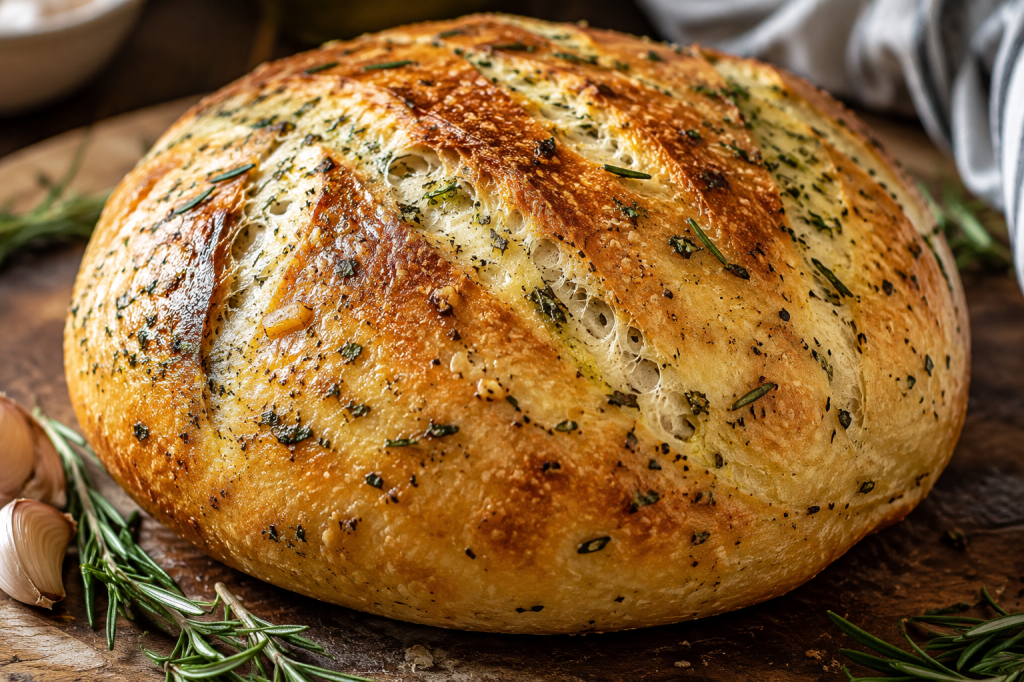
There is something special about pulling a homemade loaf from the oven while the kitchen fills with the aroma of garlic, rosemary, and freshly baked bread. This Rustic Rosemary Garlic Herb Bread with Olive Oil and a Golden Crust has a beautifully crisp exterior, a soft and airy center, and plenty of savory herb flavor.
Your original recipe already has a solid homemade bread base with flour, yeast, olive oil, parsley, oregano, thyme, and garlic. However, despite the original title mentioning rosemary, rosemary isn’t actually included in the ingredient list. This improved version adds fresh rosemary while keeping the complementary herbs.
It’s an excellent bread to serve alongside soup, pasta, salads, roasted dishes, or simply warm with butter or good-quality olive oil.
Why You’ll Love This Recipe
- Golden, rustic crust: High-temperature baking creates a beautifully browned exterior.
- Soft interior: The center stays tender and pleasantly chewy.
- Full of herbs: Rosemary, thyme, oregano, and parsley create a fragrant savory loaf.
- Fresh garlic: Adds another layer of flavor without overwhelming the bread.
- Simple ingredients: No specialty bread ingredients are required.
- Versatile: Serve it with dinner, soup, pasta, or as part of an appetizer board.
- Freezer-friendly: Make an extra loaf and freeze it for later.
- Beautiful presentation: A few simple scores across the top give it an artisan-style appearance.
Ingredient Notes
All-Purpose Flour
All-purpose flour keeps this bread accessible and creates a soft interior with enough structure for a rustic round loaf.
Measure your flour carefully. Adding too much can make homemade bread dense and dry.
Instant Yeast
The original recipe uses 2¼ teaspoons instant yeast, which is approximately one standard packet.
Although instant yeast doesn’t technically require activation, letting it sit briefly with warm water and sugar is useful for confirming that the yeast is active.
Warm Water
The water should feel comfortably warm, not hot.
Water that’s excessively hot can damage the yeast.
Sugar
A tablespoon of sugar adds a very subtle sweetness and helps get the yeast started.
Extra-Virgin Olive Oil
Olive oil adds flavor and helps keep the interior tender.
We’ll also use a little on the surface before baking to encourage a beautiful golden finish.
Fresh Rosemary
Fresh rosemary becomes the signature herb in this improved version.
Finely chop it so the flavor is distributed throughout the loaf rather than appearing in large, tough pieces.
Garlic
Fresh minced garlic pairs naturally with rosemary and olive oil. The original recipe lists garlic as optional; here, I recommend keeping it because it makes the bread significantly more flavorful.
Thyme, Oregano and Parsley
These herbs support the rosemary without competing with it. Since rosemary has a stronger flavor, we’ll use smaller amounts of the other herbs.
Time and Servings
Prep Time: 20 minutes
First Rise: 1 hour
Second Rise: 30 minutes
Bake Time: 25–30 minutes
Cooling Time: 20 minutes
Total Time: About 2 hours 40 minutes
Servings: 10–12 slices
Yield: 1 rustic round loaf
Course: Bread, Side Dish
Method: Baking
Ingredients
For the Dough
- 3 cups (360 g) all-purpose flour, plus more as needed
- 2¼ teaspoons instant yeast
- 1 tablespoon granulated sugar
- 1 teaspoon salt
- 1 cup (240 ml) warm water
- 2 tablespoons extra-virgin olive oil
- 1½ tablespoons finely chopped fresh rosemary
- 1 teaspoon dried parsley
- ½ teaspoon dried oregano
- ½ teaspoon dried thyme
- 2 garlic cloves, finely minced
For the Top
- 1 tablespoon extra-virgin olive oil
- 1 teaspoon finely chopped fresh rosemary
- Pinch of flaky sea salt, optional
Instructions
1. Activate the Yeast
Pour the warm water into a large mixing bowl.
Add the sugar and yeast and gently stir.
Allow the mixture to stand for approximately 5–10 minutes, until the surface looks creamy or slightly foamy. This follows the basic yeast preparation used in your original recipe.
If nothing happens after 10 minutes, your yeast may no longer be active.
2. Add the Olive Oil and Herbs
Add the olive oil, chopped fresh rosemary, parsley, oregano, thyme, and minced garlic.
Stir briefly to combine.
3. Add the Flour and Salt
Add approximately 2½ cups of the flour and the salt.
Stir with a wooden spoon until a shaggy dough begins to form.
Gradually add the remaining flour until the dough becomes soft and workable.
Avoid adding unnecessary flour. A slightly tacky dough is preferable to a dry one.
4. Knead the Dough
Transfer the dough to a lightly floured work surface.
Knead for approximately 8–10 minutes, which is also the kneading time in the original recipe.
The finished dough should feel smooth, elastic, and slightly tacky without sticking heavily to your hands.
5. First Rise
Lightly grease a clean bowl with olive oil.
Shape the dough into a ball and place it inside, turning once so the surface is lightly coated.
Cover with a clean kitchen towel or plastic wrap.
Allow the dough to rise in a warm, draft-free place for approximately 1 hour, or until roughly doubled in size.
6. Shape the Loaf
Gently press the risen dough to release excess gas.
Transfer it to a lightly floured surface and shape it into a tight round loaf.
Try not to aggressively knead it again.
7. Second Rise
Transfer the shaped loaf to a parchment-lined baking sheet.
Cover loosely and allow it to rise for another 30 minutes, matching the second rise in the original recipe.
The loaf should look noticeably puffier.
8. Preheat the Oven
While the bread completes its second rise, preheat the oven to 425°F (220°C).
Allow the oven to preheat thoroughly before baking.
9. Prepare the Top
Gently brush the surface of the loaf with olive oil.
Sprinkle with fresh rosemary and a small amount of flaky sea salt, if desired.
10. Score the Bread
Using a very sharp knife or bread lame, make several shallow cuts across the surface.
You can make one long slash, a cross, or several parallel cuts.
Scoring allows the bread to expand more predictably as it bakes.
11. Bake
Bake for approximately 25–30 minutes, until the loaf is deeply golden brown.
The bread should sound somewhat hollow when tapped underneath.
For greater precision, the center of a lean-style loaf like this should generally be around 190–200°F (88–93°C) when fully baked.
12. Cool
Transfer the bread to a wire rack.
Although it will smell tempting, avoid cutting it immediately.
Allow it to cool for at least 20 minutes so the interior can finish setting.
13. Slice and Serve
Slice with a serrated bread knife.
Serve warm or at room temperature with butter, olive oil, soup, pasta, or your favorite meal.
Tips for the Best Rosemary Garlic Bread
Don’t use overly hot water. Warm water encourages yeast activity; very hot water can damage it.
Measure flour carefully. Too much flour is one of the easiest ways to end up with dense homemade bread.
Keep the dough slightly tacky. Don’t continue adding flour until the dough feels completely dry.
Give the dough enough time to rise. Room temperature affects rising time, so use the appearance of the dough rather than watching the clock alone.
Chop rosemary finely. Large rosemary needles can be unpleasant in the finished bread.
Don’t overdo the garlic. Two cloves provide plenty of flavor while still allowing the rosemary and olive oil to shine.
Preheat thoroughly. Putting bread into an oven that hasn’t reached temperature can reduce oven spring.
Let it cool before slicing. Cutting immediately can compress the crumb and make the center seem gummy.
How to Get a Crispier Golden Crust
For an especially rustic crust, place a small oven-safe pan on a lower rack while preheating the oven.
Immediately after placing the bread in the oven, carefully pour a small amount of hot water into that pan and close the oven door.
The temporary burst of steam can help the loaf expand and develop a crisp exterior.
You can also bake the bread on a preheated baking stone or steel if you have one.
For this recipe, though, neither technique is essential. A regular parchment-lined baking sheet will still produce excellent results.
How to Know When the Dough Has Risen Enough
Rather than relying exclusively on time, gently press one finger into the risen dough.
If the indentation slowly begins to spring back but remains slightly visible, the dough is generally ready.
If it immediately springs completely back, it may need additional rising time.
If it collapses significantly, it may have proofed for too long.
Delicious Variations
Parmesan Rosemary Bread
Add ½ cup freshly grated Parmesan to the dough for extra savory flavor.
Sprinkle a little more Parmesan over the surface before baking.
Roasted Garlic Rosemary Bread
Replace fresh minced garlic with soft roasted garlic for a sweeter, mellower garlic flavor.
Olive Rosemary Bread
Fold approximately ½ cup chopped Kalamata olives into the dough.
Sun-Dried Tomato Herb Bread
Add finely chopped, well-drained sun-dried tomatoes during the final few minutes of kneading.
Cheese-Stuffed Version
Add small pieces of mozzarella while shaping the loaf for pockets of melted cheese.
Extra Rosemary Version
Increase the fresh rosemary slightly and omit the oregano and parsley for a simpler rosemary-forward loaf.
Garlic Butter Finish
Immediately after baking, lightly brush the hot crust with melted garlic butter for a softer, richer finish.
What to Serve with Rosemary Garlic Bread
This bread is particularly good alongside creamy soups, tomato soup, roasted vegetables, pasta, chicken dishes, salads, or Mediterranean-inspired meals.
You can also slice and toast leftovers, then serve them with olive oil and balsamic vinegar.
For an appetizer, cut the loaf into slices and serve with whipped feta, hummus, baked brie, or a simple herb-infused olive oil.
Make-Ahead Instructions
You can prepare the dough ahead and allow the first rise to happen slowly in the refrigerator.
After mixing and kneading, place the dough in a lightly oiled covered bowl and refrigerate overnight.
The following day, allow it to come closer to room temperature, shape the loaf, complete the second rise, and bake as directed.
The slower fermentation can actually develop additional flavor.
Storage
Room Temperature
Allow the bread to cool completely before storing.
Keep it in a bread bag or airtight container at room temperature for up to 2–3 days.
Avoid refrigerating bread unless necessary because refrigeration can make it become stale more quickly.
Freezing
This bread freezes very well.
Wrap the completely cooled loaf tightly and freeze for up to 3 months.
You can also slice it before freezing so individual pieces can be removed as needed.
Reheating
Warm the loaf in a 350°F (175°C) oven for approximately 5–10 minutes.
Individual slices can also be toasted.
Frequently Asked Questions
Can I use dried rosemary instead of fresh?
Yes. Because dried rosemary is more concentrated, use approximately 1½–2 teaspoons dried rosemary instead of the fresh rosemary.
Why didn’t my bread rise?
The yeast may have been old, the water may have been too hot or too cold, or the room may simply have been cool.
Why is my homemade bread dense?
Common causes include too much flour, insufficient kneading, not enough rising time, or inactive yeast.
Can I make this bread without garlic?
Absolutely. Leave out the garlic and make a simple rosemary herb loaf.
Can I use bread flour?
Yes. Bread flour contains more protein and can create a slightly chewier crumb. You may need to adjust the water or flour very slightly depending on how the dough feels.
Do I need a Dutch oven?
No. This recipe is designed to work on a regular baking sheet.
Can I use a stand mixer?
Yes. Mix with the dough hook and knead on low to medium-low speed until the dough becomes smooth and elastic.
Why do I need to score the bread?
Scoring creates controlled weak points where the dough can expand during the first part of baking rather than splitting unpredictably.
Can I make the dough overnight?
Yes. An overnight refrigerated first rise works very well and can deepen the flavor.
Conclusion
This Rustic Rosemary Garlic Herb Bread with Olive Oil and a Golden Crust is a simple way to bring the aroma and flavor of homemade artisan-style bread into your kitchen.
Fresh rosemary and garlic give the loaf its signature savory character, while olive oil keeps the interior tender and helps create a beautifully golden exterior. Thyme, oregano, and parsley add subtle complexity without overpowering the rosemary.
Serve it warm alongside soup or pasta, dip it into olive oil, or simply tear off a piece and enjoy it with butter.
Soft on the inside and perfectly golden on the outside, this homemade herb bread is packed with fresh flavor and a delicious aroma. It’s the perfect side for soups, salads, or enjoyed warm with a little butter.
 Lea recipes
Leave a comment