Introduction
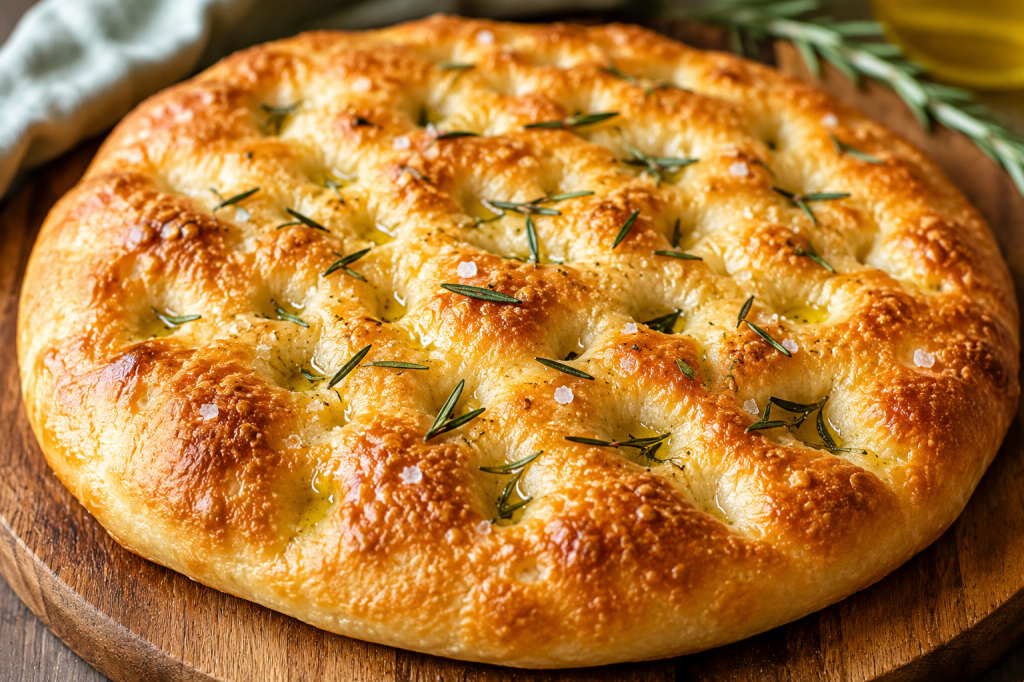
There’s nothing quite like the smell of freshly baked focaccia filling the kitchen. This Homemade Rosemary Focaccia Bread has a beautifully golden, slightly crispy crust with an incredibly soft and airy center.
Generously coated with extra virgin olive oil, fresh rosemary, and flaky sea salt, this Italian-inspired bread is simple enough for beginners while still delivering bakery-style results.
Serve it warm alongside soups and pasta, use it for sandwiches, or simply tear off a piece and dip it into good olive oil.
Why You’ll Love This Rosemary Focaccia
This homemade focaccia is one of those recipes that looks impressive but requires only a handful of simple ingredients.
- Soft and airy inside: The high-hydration dough creates a light, fluffy texture with beautiful air pockets.
- Golden crispy edges: Olive oil gives the bottom and edges a deliciously crisp finish.
- Simple ingredients: No complicated or expensive ingredients are required.
- Beginner-friendly: There’s no complicated shaping involved.
- Versatile: Serve it as an appetizer, side dish, sandwich bread, or snack.
- Easy to customize: Add garlic, tomatoes, olives, onions, Parmesan, or your favorite herbs.
Ingredient Notes
All-Purpose Flour
Regular all-purpose flour works perfectly and creates a tender, fluffy focaccia. Bread flour can also be used if you prefer a slightly chewier texture.
Instant Yeast
Instant yeast helps the dough rise efficiently and can be mixed directly with the flour.
Warm Water
Warm water activates the yeast and provides the high hydration needed for an airy focaccia. The water should feel comfortably warm, not hot.
Extra Virgin Olive Oil
Olive oil is one of the most important ingredients in focaccia. It adds flavor while helping create that signature golden, slightly crispy crust.
Fresh Rosemary
Fresh rosemary provides the classic aromatic flavor. Dried rosemary can be substituted, but fresh rosemary gives the best result.
Flaky Sea Salt
A final sprinkle of flaky salt gives every bite a delicious savory finish.
Preparation Time
Prep Time: 15 minutes
First Rise: 1–2 hours
Second Rise: 30 minutes
Bake Time: 20–25 minutes
Total Time: About 2–3 hours
Servings: 8–10
Ingredients
- 500 g (4 cups) all-purpose flour
- 7 g (2 ¼ teaspoons) instant yeast
- 1 teaspoon granulated sugar
- 1 ½ teaspoons salt
- 400 ml (1 ⅔ cups) warm water
- 4 tablespoons extra virgin olive oil, divided, plus more for the pan
- 2 tablespoons fresh rosemary, roughly chopped
- Flaky sea salt, for topping
Instructions
1. Prepare the Dough
In a large mixing bowl, combine the flour, instant yeast, sugar, and salt.
Pour in the warm water and 2 tablespoons of olive oil.
Mix with a wooden spoon or spatula until everything comes together into a very soft, sticky dough.
The dough is supposed to be sticky, so avoid adding extra flour.
2. Let the Dough Rise
Cover the bowl with plastic wrap or a clean kitchen towel.
Leave the dough in a warm place for 1–2 hours, or until it has approximately doubled in size and looks bubbly and airy.
3. Prepare the Baking Pan
Generously coat a baking pan with olive oil, making sure the bottom and sides are well covered.
This prevents sticking while helping the focaccia develop its crispy golden bottom.
4. Transfer the Dough
Lightly oil your hands.
Gently transfer the risen dough into the prepared pan.
Carefully stretch the dough toward the edges without aggressively pressing out the air bubbles.
If the dough keeps springing back, allow it to rest for 10 minutes before stretching it again.
5. Second Rise
Cover the pan loosely and allow the dough to rest for approximately 30 minutes.
During this time, the focaccia should become noticeably puffier.
6. Preheat the Oven
Preheat your oven to 425°F (220°C).
Position a rack in the center of the oven.
7. Create the Classic Focaccia Dimples
Drizzle the remaining olive oil generously over the surface.
Coat your fingertips with a little olive oil and gently press them deeply into the dough to create the characteristic focaccia dimples.
Try not to completely deflate the dough.
8. Add the Toppings
Scatter the chopped fresh rosemary evenly over the surface.
Finish with a generous pinch of flaky sea salt.
9. Bake
Bake for 20–25 minutes, or until the top is deeply golden and the edges look crisp.
The bottom should also be beautifully golden.
10. Cool and Serve
Remove the focaccia from the oven and drizzle with a little additional olive oil if desired.
Allow it to cool for about 10–15 minutes before removing it from the pan.
Slice into squares or simply tear it into rustic pieces and serve warm.
Tips for the Best Focaccia
Don’t add too much flour. A wet, sticky dough is important for creating the light and airy interior.
Be generous with olive oil. It contributes significantly to both the flavor and the crispy texture.
Give the dough enough time to rise. A well-risen dough creates larger air pockets and a lighter texture.
Oil your fingers before dimpling. This prevents the dough from sticking to your hands.
Don’t flatten the dough aggressively. Handle it gently to preserve the air created during fermentation.
Bake until truly golden. A pale focaccia will lack the crispy exterior and rich flavor that makes this bread so delicious.
Delicious Variations
Garlic Rosemary Focaccia
Add thinly sliced garlic or roasted garlic cloves before baking.
Cherry Tomato Focaccia
Press halved cherry tomatoes gently into the dough before adding the rosemary.
Parmesan Focaccia
Sprinkle freshly grated Parmesan over the surface during the final few minutes of baking.
Olive Focaccia
Add sliced Kalamata or green olives before baking.
Caramelized Onion Focaccia
Scatter caramelized onions over the dough for a sweet and savory variation.
Herb Focaccia
Combine rosemary with fresh thyme, oregano, or sage.
How to Store Rosemary Focaccia
Allow the focaccia to cool completely before storing.
Keep it in an airtight container or tightly wrapped at room temperature for up to 2 days.
For longer storage, refrigerate it for up to 4 days, although refrigeration can make bread slightly firmer.
How to Reheat
For the best texture, warm the focaccia in a 350°F (175°C) oven for 5–8 minutes.
This helps restore its crispy exterior while keeping the inside soft.
Can You Freeze Focaccia?
Yes. Slice the completely cooled focaccia into individual portions and place them in a freezer-safe container or bag.
Freeze for up to 2 months.
Thaw at room temperature and warm briefly in the oven before serving.
Frequently Asked Questions
Why is my focaccia dough so sticky?
Focaccia dough naturally has a high water content. The sticky texture helps produce the characteristic soft interior and large air pockets, so resist the temptation to keep adding flour.
Why didn’t my focaccia rise?
Your yeast may have been old, the water may have been too hot, or the room may have been too cold. Give the dough enough time to visibly double in size rather than relying only on the clock.
Can I use dried rosemary?
Yes. Fresh rosemary gives the best aroma, but dried rosemary works too. Use approximately 2 teaspoons dried rosemary in place of the fresh rosemary.
Can I prepare focaccia ahead of time?
Yes. For even more flavor, the dough can be refrigerated overnight and baked the following day. Allow it to come closer to room temperature and become puffy before baking.
What should I serve with focaccia?
Rosemary focaccia pairs beautifully with tomato soup, creamy soups, pasta, salads, grilled vegetables, chicken, or Italian-style dishes. It is also excellent served simply with olive oil for dipping.
Conclusion
This Homemade Rosemary Focaccia Bread with Crispy Golden Crust and Fluffy Center proves that bakery-style bread can be made at home with simple ingredients.
The combination of a fluffy interior, crispy olive-oil-coated edges, fragrant rosemary, and flaky sea salt makes it difficult to stop at just one piece.
Serve it warm from the oven as a side dish, appetizer, sandwich bread, or simply enjoy it dipped in olive oil.
 Lea recipes
Leave a comment