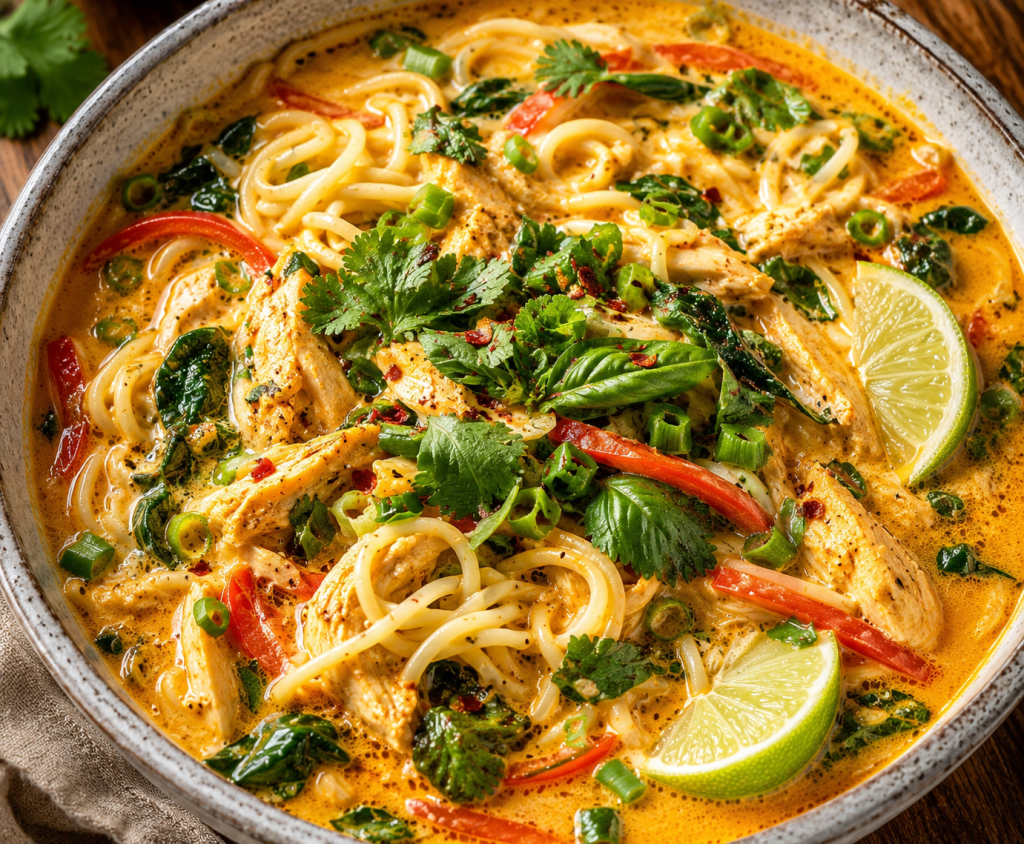
This Coconut Curry Noodle Soup combines tender chicken, silky noodles, colorful vegetables, and fresh herbs in a rich coconut curry broth. Red curry paste, ginger, garlic, creamy coconut milk, and fresh lime create a comforting balance of savory, creamy, spicy, and bright flavors. Ready in about 40 minutes, it makes an easy and satisfying weeknight dinner.
Why You’ll Love This Recipe
- Rich and creamy coconut curry broth
- Tender chicken and plenty of noodles
- Fresh lime adds a bright, refreshing finish
- Loaded with colorful vegetables and herbs
- Easy one-pot dinner
- Ready in about 40 minutes
- Easy to adjust from mild to spicy
Time and Servings
Prep Time: 15 minutes
Cook Time: 25 minutes
Total Time: 40 minutes
Servings: 6
Ingredients
For the Soup
- 1 tablespoon vegetable oil or avocado oil
- 1 1/2 pounds (680 g) boneless, skinless chicken breasts or chicken thighs
- 1/2 teaspoon salt
- 1/4 teaspoon freshly ground black pepper
- 1 medium yellow onion, thinly sliced
- 1 red bell pepper, thinly sliced
- 1 medium carrot, cut into thin strips
- 4 garlic cloves, minced
- 1 tablespoon freshly grated ginger
- 3 tablespoons Thai red curry paste
- 1 teaspoon ground turmeric
- 4 cups low-sodium chicken broth
- 2 cans (13.5 oz / 400 ml each) full-fat coconut milk
- 1 tablespoon soy sauce
- 2 teaspoons brown sugar
- 6 oz (170 g) baby spinach
- 8 oz (225 g) rice noodles
For Finishing
- 2 tablespoons fresh lime juice
- 2 green onions, thinly sliced
- 1/2 cup fresh cilantro leaves, roughly chopped
- 1/4 cup fresh basil leaves, roughly torn
- Lime wedges, for serving
- Red pepper flakes or sliced fresh chili, optional
Instructions
1. Prepare the Chicken
Pat the chicken dry with paper towels and season both sides with salt and black pepper.
Heat the oil in a large Dutch oven or heavy-bottomed pot over medium-high heat.
Add the chicken and cook for about 4–5 minutes per side, until lightly golden. The chicken does not need to be completely cooked through at this stage.
Transfer to a clean plate and set aside.
2. Sauté the Vegetables
Reduce the heat to medium.
Add the sliced onion, red bell pepper, and carrot to the same pot.
Cook for 4–5 minutes, stirring occasionally, until the vegetables begin to soften while still retaining some texture.
Add the garlic and ginger and cook for another 30–60 seconds, stirring constantly until fragrant.
3. Bloom the Curry Paste
Add the red curry paste and turmeric.
Cook for 1 minute, stirring continuously and coating the vegetables in the curry mixture.
Cooking the curry paste briefly before adding the liquid helps deepen its flavor.
4. Make the Coconut Curry Broth
Slowly pour in the chicken broth while stirring and scraping any flavorful browned bits from the bottom of the pot.
Add the coconut milk, soy sauce, and brown sugar.
Stir thoroughly until the coconut milk and curry paste are evenly incorporated.
Bring the soup to a gentle simmer.
5. Cook the Chicken
Return the chicken to the pot.
Reduce the heat to medium-low and gently simmer for 8–12 minutes, depending on the thickness of the chicken, until it reaches an internal temperature of 165°F (74°C).
Transfer the cooked chicken to a cutting board.
Allow it to rest for a few minutes, then shred it into bite-size pieces using two forks.
Return the shredded chicken to the soup.
6. Add the Noodles
Add the rice noodles to the gently simmering broth.
Cook according to the package directions, usually 3–6 minutes, stirring occasionally to prevent them from sticking together.
Avoid overcooking the noodles, as they will continue to soften slightly in the hot broth.
7. Add the Spinach
Add the baby spinach and gently stir it into the soup.
Cook for approximately 1 minute, just until wilted.
Reduce the heat to low.
8. Add the Fresh Lime and Herbs
Remove the pot from the heat.
Stir in the fresh lime juice, half of the green onions, half of the cilantro, and half of the basil.
Taste the broth and adjust with additional salt, soy sauce, or lime juice as needed.
9. Serve
Divide the noodles, chicken, vegetables, and coconut curry broth among serving bowls.
Top with the remaining cilantro, basil, and green onions.
Add red pepper flakes or fresh chili for extra heat.
Serve immediately with fresh lime wedges on the side.
Tips for the Best Coconut Curry Noodle Soup
Use Full-Fat Coconut Milk
Full-fat coconut milk creates a richer, smoother broth and balances the heat of the curry paste.
Cook the Curry Paste Before Adding Liquid
Briefly frying the curry paste with the aromatics helps release its flavor and gives the broth more depth.
Adjust the Curry Paste
Different brands of Thai curry paste vary significantly in heat. Start with 2 tablespoons for a milder soup or use 3–4 tablespoons for a stronger curry flavor.
Add Lime Juice at the End
Fresh lime juice tastes brighter when added after the soup is removed from direct heat.
Don’t Overcook the Noodles
Rice noodles soften quickly. Cook only until tender to prevent them from becoming mushy.
Keep the Herbs Fresh
Add most of the cilantro and basil at the end rather than simmering them for a long time. This preserves their fresh flavor and color.
Variations
Shrimp Coconut Curry Noodle Soup
Replace the chicken with peeled and deveined shrimp. Add the shrimp during the final few minutes of cooking and simmer just until pink and opaque.
Vegetarian Coconut Curry Noodle Soup
Replace the chicken broth with vegetable broth and use cubed firm tofu instead of chicken.
Extra-Spicy Curry Soup
Add sliced Thai chili, chili crisp, or additional red curry paste.
Extra-Vegetable Version
Add mushrooms, snap peas, broccoli, zucchini, or bok choy.
Creamier Coconut Curry Soup
Use slightly less chicken broth for a thicker, richer coconut curry base.
What to Serve with Coconut Curry Noodle Soup
This soup is hearty enough to serve on its own. It also pairs well with cucumber salad, vegetable spring rolls, steamed edamame, or a simple Asian-inspired cabbage salad.
Storage
For the best texture, store leftover noodles separately from the broth whenever possible.
Transfer the cooled coconut curry soup to an airtight container and refrigerate for up to 3 days.
Cooked rice noodles can be refrigerated separately in an airtight container.
Reheating
Reheat the broth gently in a saucepan over medium-low heat until hot.
Add the noodles shortly before serving and heat only until warmed through.
If the broth becomes too thick after refrigeration, add a small amount of chicken broth or coconut milk.
Avoid vigorously boiling the soup during reheating, as excessive heat can affect the texture of the coconut milk.
Frequently Asked Questions
What noodles work best for coconut curry soup?
Medium rice noodles work particularly well because they absorb the curry broth while remaining light and tender. Thin rice noodles can also be used.
Can the soup be made ahead?
Yes. Prepare the curry broth and chicken ahead of time, but cook and add the noodles shortly before serving for the best texture.
Is coconut curry noodle soup spicy?
It can be mild or spicy depending on the curry paste and the amount used. Two tablespoons usually produce a milder flavor, while additional curry paste or fresh chili increases the heat.
Can light coconut milk be used?
Yes, but the broth will be thinner and less creamy. Full-fat coconut milk provides the richest texture.
Can rotisserie chicken be used?
Yes. Approximately 3 cups of shredded cooked chicken can replace the raw chicken. Add it after the coconut curry broth has simmered and heat until warmed through.
How can the soup be made less spicy?
Use less curry paste and omit the red pepper flakes or fresh chili. Additional coconut milk can also soften the heat.
Conclusion
Coconut Curry Noodle Soup with Fresh Lime & Herbs brings together tender chicken, silky rice noodles, colorful vegetables, and fresh herbs in a creamy coconut curry broth. Ginger, garlic, red curry paste, and turmeric provide warmth and depth, while fresh lime, cilantro, and basil keep every bowl bright and flavorful.
 Lea recipes
Leave a comment