Introduction
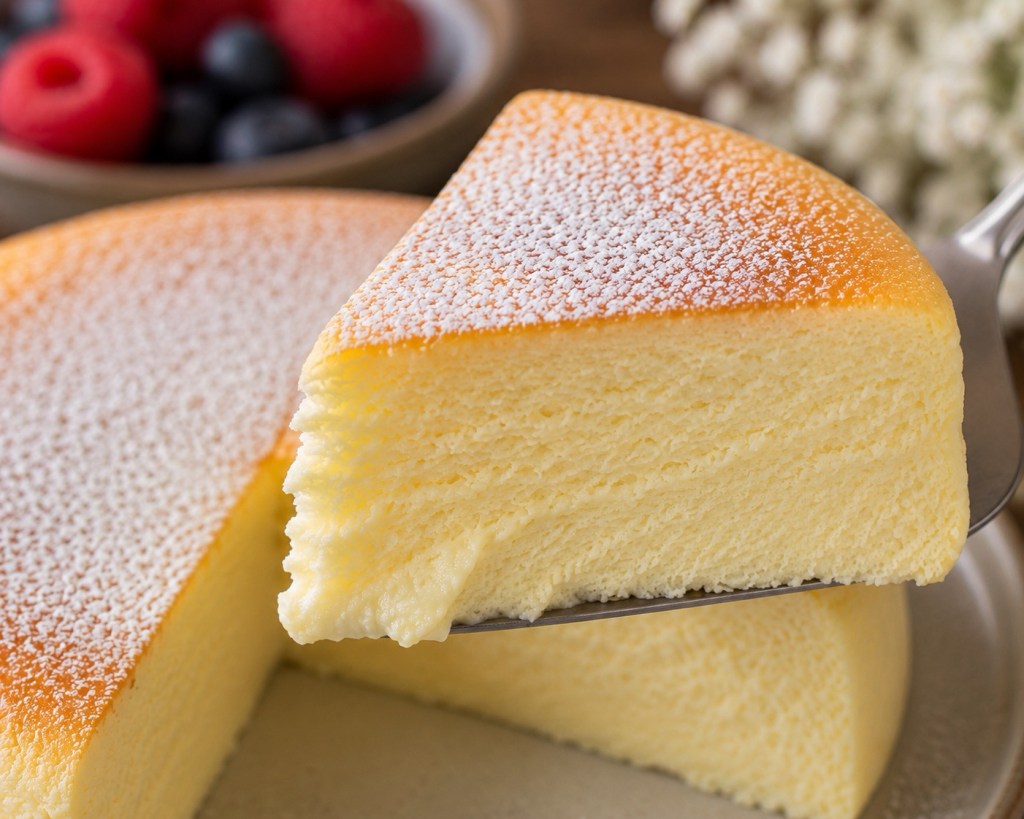
Light as a cloud, delicately sweet, and incredibly soft, Japanese Cotton Cheesecake is one of the most elegant desserts you can bake at home. Unlike the rich, dense texture of a classic New York cheesecake, this Japanese favorite combines the creaminess of cheesecake with the airy lightness of a soufflé, creating a dessert that gently jiggles and practically melts on your tongue. The signature texture comes from folding a whipped meringue into the cream cheese batter before baking it gently in a water bath.
Its delicate crumb, subtle vanilla flavor, and hint of cream cheese make every bite feel wonderfully light without being overly sweet. The beautiful golden top and fluffy interior make it just as impressive to serve at celebrations, afternoon tea, birthdays, or family gatherings as it is for an everyday homemade treat.
Although Japanese cotton cheesecake has a reputation for being challenging, success comes down to a few simple techniques. Using room-temperature ingredients, whipping the egg whites to the correct consistency, folding them gently into the batter, and baking the cake slowly in a water bath all contribute to its famous soft, cotton-like texture.
Whether you’re baking it for the first time or perfecting your technique, this foolproof recipe will help you create a beautifully fluffy cheesecake with a delicate rise, an irresistibly creamy center, and that signature melt-in-your-mouth finish everyone loves.
Why You’ll Love This Recipe
- Incredibly light, fluffy, and cloud-like texture.
- Creamy cheesecake flavor without being heavy.
- Beautiful signature jiggle.
- Perfectly balanced sweetness.
- Made with simple pantry ingredients.
- Elegant enough for holidays and special occasions.
- Easier to make than it looks.
- Wonderful served plain or with fresh berries.
- Perfect with tea or coffee.
- A stunning homemade dessert that always impresses.
Why This Japanese Cotton Cheesecake Is So Special
Japanese Cotton Cheesecake is loved around the world for its unique texture that falls somewhere between a classic cheesecake, a sponge cake, and a soufflé. Instead of being rich and dense, it’s incredibly light, airy, and delicate, with a subtle cream cheese flavor that never feels overwhelming.
The secret lies in the whipped egg whites. Folded gently into the cream cheese batter, they create thousands of tiny air bubbles that expand during baking, giving the cake its signature height and soft, cloud-like crumb. Baking the cheesecake slowly in a water bath ensures even cooking while preventing the delicate texture from drying out or cracking.
Unlike traditional cheesecakes that require hours of chilling before serving, Japanese cotton cheesecake is delicious either slightly warm or fully chilled. Its delicate sweetness makes it an elegant dessert that’s perfect any time of the day.
Ingredients You’ll Need
For the Cheesecake
8 oz (225 g) cream cheese, softened
¼ cup (60 g) unsalted butter
½ cup (120 ml) whole milk
6 large eggs, separated
½ cup (100 g) granulated sugar, divided
¾ cup (90 g) cake flour
2 tablespoons cornstarch
1 teaspoon vanilla extract
1 teaspoon fresh lemon juice
¼ teaspoon salt
¼ teaspoon cream of tartar (optional)
For Garnishing
Powdered sugar
Fresh strawberries
Fresh blueberries
Whipped cream (optional)
Mint leaves
Ingredient Notes
Cream Cheese
Use full-fat block cream cheese for the smoothest, richest texture. Allow it to come to room temperature before mixing to prevent lumps.
Cake Flour
Cake flour produces a finer, softer crumb than all-purpose flour, giving the cheesecake its signature cotton-like texture.
Cornstarch
A small amount of cornstarch helps stabilize the batter while keeping the crumb delicate and tender.
Eggs
Separate the eggs carefully while they’re still cold, then allow them to reach room temperature before using. Room-temperature egg whites whip to a greater volume, creating a lighter cheesecake.
Lemon Juice
Just a touch brightens the flavor and balances the richness of the cream cheese without making the cake taste lemony.
Kitchen Equipment
8-inch (20 cm) round cake pan
Parchment paper
Stand mixer or hand mixer
Heatproof mixing bowl
Medium saucepan
Fine-mesh sieve
Rubber spatula
Large roasting pan
Wire cooling rack
Prep Time, Cook Time & Servings
Prep Time: 25 minutes
Cook Time: 1 hour 20 minutes
Cooling Time: 1 hour
Total Time: 2 hours 45 minutes
Servings: 8
Instructions
Step 1: Prepare the Pan and Oven
Preheat your oven to 320°F (160°C).
Line the bottom and sides of an 8-inch (20 cm) round cake pan with parchment paper. Wrap the outside of the pan with two layers of aluminum foil to prevent water from leaking in during the water bath.
Bring a kettle of water to a simmer for the water bath.
Step 2: Prepare the Cream Cheese Mixture
In a heatproof bowl set over a saucepan of barely simmering water, combine the cream cheese, butter, and milk.
Stir gently until completely smooth and silky.
Remove from the heat and let the mixture cool slightly.
Whisk in the egg yolks one at a time, then add the vanilla extract and lemon juice.
Sift in the cake flour, cornstarch, and salt. Mix just until smooth, taking care not to overmix.
Step 3: Whip the Meringue
In a clean, grease-free bowl, beat the egg whites until foamy.
Add the cream of tartar, then gradually add the sugar while continuing to beat.
Whip until medium-soft peaks form. The meringue should be glossy and hold its shape while the tip gently folds over. Avoid beating to stiff peaks, as this can cause the cheesecake to crack or collapse.
Step 4: Fold the Batter
Add one-third of the whipped meringue to the cream cheese mixture and gently whisk to lighten the batter.
Using a rubber spatula, carefully fold in the remaining meringue in two additions. Fold slowly from the bottom of the bowl, rotating as you go, until no white streaks remain.
Be careful not to deflate the batter, as the trapped air is what gives the cheesecake its signature fluffy texture.
Step 5: Bake
Pour the batter into the prepared cake pan and gently tap it on the counter once or twice to release any large air bubbles.
Place the cake pan inside a larger roasting pan and carefully pour hot water into the roasting pan until it reaches about halfway up the sides of the cake pan.
Bake for 70–80 minutes, or until the top is lightly golden and the center has a gentle jiggle when lightly shaken.
Step 6: Cool Slowly
Turn off the oven and leave the cheesecake inside with the door slightly open for 15–20 minutes.
Remove the cake from the water bath and allow it to cool completely on a wire rack.
For the best flavor and texture, refrigerate for at least 4 hours, or overnight before serving.
Step 7: Garnish and Serve
Carefully remove the parchment paper.
Dust the cheesecake lightly with powdered sugar and garnish with fresh berries, whipped cream, or mint leaves if desired.
Slice using a sharp knife wiped clean between each cut, and enjoy every soft, fluffy, melt-in-your-mouth bite.
Tips for the Perfect Japanese Cotton Cheesecake
Japanese cotton cheesecake is delicate, but with a few simple techniques, you’ll achieve a beautifully tall, fluffy, and crack-free cake every time.
Use room-temperature ingredients so the batter mixes smoothly without lumps.
Whip the egg whites to medium-soft peaks, not stiff peaks, for the lightest texture.
Fold the meringue gently to preserve as much air as possible.
Always sift the flour and cornstarch to prevent lumps.
Bake the cheesecake in a water bath for gentle, even heat.
Avoid opening the oven door while baking, as sudden temperature changes can cause the cake to collapse.
Let the cheesecake cool gradually inside the oven before removing it.
Chill for several hours before slicing for the cleanest cuts and best flavor.
Variations
This fluffy cheesecake is easy to customize with different flavors.
Matcha Japanese Cheesecake
Add 1 to 2 teaspoons of matcha powder to the flour mixture for a delicate green tea flavor and beautiful color.
Chocolate Cotton Cheesecake
Fold melted dark chocolate into the cream cheese mixture for a rich chocolate version while maintaining the airy texture.
Lemon Cotton Cheesecake
Increase the lemon juice slightly and add a little lemon zest for a bright, refreshing citrus flavor.
Strawberry Cotton Cheesecake
Serve each slice with fresh strawberries and a homemade strawberry sauce for an elegant dessert.
Japanese Cheesecake with Fresh Fruit
Top the cooled cheesecake with blueberries, raspberries, kiwi, peaches, or mango for a colorful presentation that’s perfect for spring and summer.
What to Serve with Japanese Cotton Cheesecake
Its light texture pairs wonderfully with simple toppings and drinks.
Some delicious serving ideas include:
Fresh strawberries
Blueberries
Raspberries
Mixed berry compote
Whipped cream
Vanilla ice cream
Lemon curd
Matcha latte
Green tea
Coffee or cappuccino
Hot chocolate
Fresh mint leaves
Storage and Reheating
Refrigerator
Store the cheesecake in an airtight container or wrap it tightly with plastic wrap. It will stay fresh for up to 4 days in the refrigerator.
Freezer
Wrap individual slices in plastic wrap and place them in a freezer-safe container. Freeze for up to 2 months.
Thaw overnight in the refrigerator before serving.
Serving
Japanese cotton cheesecake is delicious served chilled, but many people also enjoy it slightly cool at room temperature. Remove it from the refrigerator about 20 minutes before serving for the softest, creamiest texture.
Frequently Asked Questions
Why did my cheesecake crack?
Cracks usually happen when the oven temperature is too high, the cheesecake is overbaked, or it cools too quickly. Baking in a water bath and allowing the cake to cool gradually inside the oven helps prevent cracking.
Why did my cheesecake collapse after baking?
A slight shrinkage is completely normal. However, excessive collapsing can occur if the meringue was overmixed, the batter was overfolded, or the cheesecake was removed from the oven too quickly. Gentle folding and slow cooling are the keys to maintaining its height.
Can I make Japanese cotton cheesecake ahead of time?
Absolutely! In fact, it tastes even better after chilling for several hours or overnight. The texture becomes creamier while remaining wonderfully light and fluffy.
Do I have to use a water bath?
Yes. The water bath creates gentle, even heat and keeps the cheesecake moist while baking. This method helps achieve the signature soft, airy texture and reduces the risk of cracking.
Can I use all-purpose flour instead of cake flour?
Yes. If cake flour isn’t available, you can use all-purpose flour, although the texture will be slightly less delicate. For a closer substitute, remove 2 tablespoons of all-purpose flour from every cup and replace them with 2 tablespoons of cornstarch before measuring.
Why isn’t my cheesecake fluffy?
The most common causes are under-whipped egg whites, overmixed batter, or opening the oven door during baking. Whipping the meringue to medium-soft peaks and folding it gently into the batter are essential for achieving the famous cotton-like texture.
Conclusion
Soft, airy, and incredibly delicate, this Japanese Cotton Cheesecake is a dessert that’s as beautiful as it is delicious. Its signature cloud-like texture, subtle sweetness, and creamy flavor make it a refreshing alternative to traditional cheesecakes, while its elegant appearance is sure to impress family and friends.
Although it may seem intimidating at first, this recipe becomes surprisingly approachable once you understand a few simple techniques. From preparing a smooth cream cheese batter to gently folding the meringue and baking the cake in a water bath, each step contributes to the light, jiggly texture that makes this dessert so special.
Whether you’re serving it with fresh berries, a dusting of powdered sugar, or simply enjoying it on its own with a cup of tea or coffee, this melt-in-your-mouth Japanese Cotton Cheesecake is guaranteed to become a recipe you’ll return to again and again.
Recipe Card Description
This Japanese Cotton Cheesecake is unbelievably light, fluffy, and creamy with a delicate soufflé-like texture that melts in your mouth. Made with simple ingredients and baked gently in a water bath, it’s the perfect elegant dessert for holidays, celebrations, afternoon tea, or any occasion that calls for something truly special.
Equipment
8-inch (20 cm) round cake pan
Parchment paper
Aluminum foil
Large roasting pan
Medium saucepan
Heatproof mixing bowl
Stand mixer or hand mixer
Fine-mesh sieve
Rubber spatula
Whisk
Cooling rack
Ingredients
Cheesecake Batter
8 oz (225 g) full-fat cream cheese, softened
¼ cup (60 g) unsalted butter
½ cup (120 ml) whole milk
6 large eggs, separated
½ cup (100 g) granulated sugar, divided
¾ cup (90 g) cake flour
2 tablespoons cornstarch
1 teaspoon vanilla extract
1 teaspoon fresh lemon juice
¼ teaspoon salt
¼ teaspoon cream of tartar (optional)
For Garnishing
Powdered sugar
Fresh strawberries
Fresh blueberries
Fresh raspberries
Whipped cream (optional)
Fresh mint leaves
Instructions
Preheat the oven to 320°F (160°C). Line an 8-inch round cake pan with parchment paper and wrap the outside with aluminum foil. Prepare a large roasting pan for the water bath.
Melt the cream cheese, butter, and milk together over a double boiler until smooth. Remove from the heat and allow the mixture to cool slightly.
Whisk in the egg yolks, vanilla extract, and lemon juice until fully combined.
Sift in the cake flour, cornstarch, and salt, then whisk until the batter is silky and lump-free.
In a separate clean bowl, beat the egg whites until foamy. Add the cream of tartar, then gradually add the sugar while beating until medium-soft peaks form.
Fold one-third of the meringue into the cream cheese mixture to lighten it, then gently fold in the remaining meringue in two additions using a rubber spatula.
Pour the batter into the prepared pan and gently tap it once or twice on the counter to remove large air bubbles.
Place the cake pan inside the roasting pan and pour hot water halfway up the sides of the cake pan.
Bake for 70–80 minutes, until the top is lightly golden and the center still has a slight jiggle.
Turn off the oven and leave the cheesecake inside with the door slightly open for 15–20 minutes.
Remove from the water bath and cool completely on a wire rack.
Refrigerate for at least 4 hours, preferably overnight.
Dust with powdered sugar, garnish with fresh berries, and serve.
Notes
Always use room-temperature ingredients for the smoothest batter.
Whip the egg whites only to medium-soft peaks.
Fold the meringue gently to preserve the air bubbles.
Bake using a water bath for the softest texture.
Avoid opening the oven during baking.
Cool the cheesecake gradually to reduce cracking.
Chill before slicing for the cleanest presentation.
Wipe the knife clean between each slice.
 Lea recipes
Leave a comment